Menu
Excerpts
Exhibits
Collections
Originals
Categories
Map
Search
Person
Thomas Jefferson
View on Map
Related Excerpts
Load More
Viewing 141–160 of 469
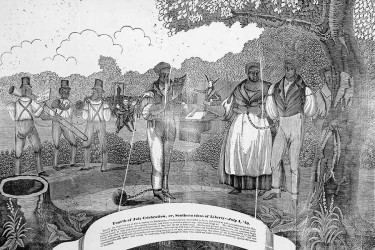
Way Down South: Slavery Far Beyond the United States
Slavery in Latin America, on a huge scale, was different from that in the United States. Why don’t we know this history?
by
Ana Lucia Araujo
via
Aeon
on
November 13, 2025
What Actually Changed in 1776
The most consequential shift that year was not one of battle lines but of ideology.
by
Edward J. Larson
via
The Atlantic
on
November 10, 2025
A Republic, If We Can Afford It
The framers of the United States Constitution envisoned economic discipline that they thought was a requirement for a republic to endure.
by
Larry Schwartz
via
Public Seminar
on
November 6, 2025
America’s Founding Fathers Had No Faith in Democracy
On the inherent contradictions behind the American revolutionary dream.
by
Joseph Ellis
via
Literary Hub
on
October 28, 2025
The Trial of the Century
On the hundredth anniversary of Tennessee v. Scopes.
by
Brenda Wineapple
via
Lapham’s Quarterly
on
October 27, 2025
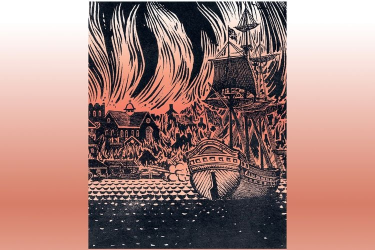
In January 1776, Norfolk Was Set Ablaze, Galvanizing the Revolution. But Who Really Lit the Match?
Blaming the British for the destruction helped persuade some colonists to back the fight for independence. But the source of the inferno was not what it seemed.
by
Andrew Lawler
via
Smithsonian Magazine
on
October 26, 2025
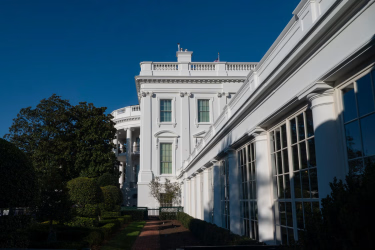
A Brief History of the White House East Wing
It had been home to the Office of the First Lady since the 1970s.
by
Rachel King
via
Town & Country
on
October 23, 2025
What Hamilton—and the Book It’s Based On—Missed About Eliza and Angelica Schuyler
How Amanda Vaill gave Eliza and Angelica Schuyler their due.
by
Elizabeth Stone
via
Slate
on
October 21, 2025
The End of Asylum
The second Trump administration has undone the division between political and economic migrants. Did it make sense to separate them to begin with?
by
Mae Ngai
via
New York Review of Books
on
October 12, 2025
The Many Lives of Eliza Schuyler
She lived for 97 years. Only 24 of them were with Alexander Hamilton.
by
Jane Kamensky
via
The Atlantic
on
October 10, 2025
Freedom and the State in Thomas Sowell’s America
Tracing Thomas Sowell’s shift from Marxism to the Chicago school of economics.
by
Oscar Hughff-Coates
via
Journal of the History of Ideas Blog
on
October 6, 2025
Democratization and Congressional Decline
To understand Congress’s abdication, look at the history of presidential selection.
by
James Devereaux
via
Law & Liberty
on
September 29, 2025
'Founders Museum' from White House and PragerU Blurs History, AI-generated Fiction
Historians say it's good to highlight America's founders, but the project takes too narrow a view of history.
by
Kristian Monroe
via
NPR
on
September 3, 2025
The One-Legged Founding Father Who Escaped the French Revolution
Gouverneur Morris wrote the preamble to the Constitution. Later in life, he rejected the foundational document as a failure.
by
Zachary Clary
via
Smithsonian Magazine
on
September 2, 2025
Inventing the American Revolution: On Thomas Paine’s Guide to Fighting Dictatorship
“How are free people supposed to stay free? One short answer: don’t trust anyone over thirty.”
by
Matthew Redmond
via
Literary Hub
on
August 13, 2025
The Founders’ Family Research
Early American elites were fascinated with genealogy, despite the ways it attached them to the Old World.
by
Karin Wulf
via
History News Network
on
August 5, 2025
The Contradictory Revolution
Historians have long grappled with “the American Paradox” of Revolutionary leaders who fought for their own liberty while denying it to enslaved Black people.
by
David S. Reynolds
via
New York Review of Books
on
July 31, 2025
partner
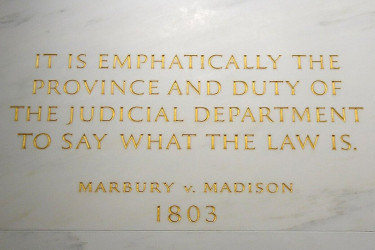
Marbury v. Madison: Annotated
Justice John Marshall’s ruling on Marbury v. Madison gave the courts the right to declare acts and laws of the other branches unconstitutional.
by
Liz Tracey
via
JSTOR Daily
on
July 29, 2025
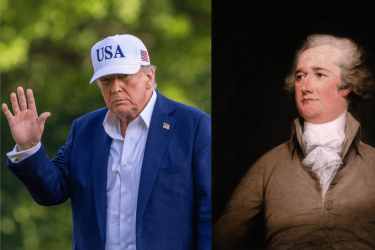
Trump Is Hamiltonian, Not Jacksonian
He believes in Federalist 70’s “Energy in the Executive.”
by
Francis P. Sempa
via
Modern Age
on
July 10, 2025
partner
The Founders Knew Great Wealth Inequality Could Destroy Us
At the founding of America, leaders predicted that a concentration of wealth would weaken the republic.
by
Daniel R. Mandell
via
Made By History
on
July 7, 2025
Previous
Page
8
of 24
Next