Person

Thomas Paine

Related Excerpts

Line of TV vans on road preparing to broadcast the funeral of Queen Elizabeth II.
partner

We Learned of The Queen’s Death Instantly. That Wasn’t The Case in 1760.

Back when monarchs had much more power—and news was far from instantaneous—it had major implications in the American colonies.
Whole Wheat Shell Pasta on Grey, by artist Rachel Doom, 2019.

Wielding Wheat

A new history makes a case for the world-ordering power of wheat.
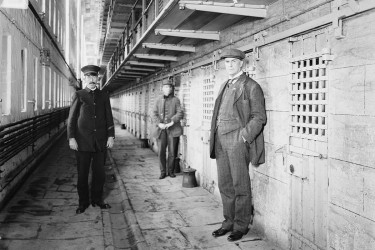
Photograph of prison warden T. M. Osborne and two other men in a penitentiary hallway.
partner

Were Early American Prisons Similar to Today's?

A correctional officer’s history of 19th century prisons and modern-day parallels. From Sing Sing to suicide watch, torture treads a fine line.
‘Flight of Lord Dunmore’; postcard, 1907.

The Paradox of the American Revolution

Recent books by Woody Holton and Alan Taylor offer fresh perspectives on early US history but overstate the importance of white supremacy as its driving force.
1862 newspaper photo, "The Rebel Lady’s Boudoir,” shows a woman and child using human bones as decor.

Sullivan Ballou’s Body: Battlefield Relic Hunting and the Fate of Soldiers’ Remains

Confederates’ quest for bones connects to a bizarre history of the use, and misuse, of human remains.
Black and white lithograph depicting the Founders signing the Declaration of Independence.

Have Americans Got George III All Wrong?

George III was a model monarch, whose reputation finally deserves rehabilitation a quarter of a millennium later.
Thomas Paine

Reframing the Story of Harvard’s Humanist Chaplaincy

The time when Harvard made an atheist their head chaplain.
Bell in 1980. He handled civil-rights cases, then came to question their impact.

The Man Behind Critical Race Theory

As an attorney, Derrick Bell worked on many civil-rights cases, but his doubts about their impact launched a groundbreaking school of thought.
Abstract painting titled 'Constellation' by Helen Gerardia

A New Planet in the System

Early Americans conscripted the universe into their nation-building project.
Political cartoon of a man being taken away from his family.
partner

The Role of Naval Impressment in the American Revolution

Maritime workers who were basically kidnapped into the British Royal Navy were a key force in the War of Independence.
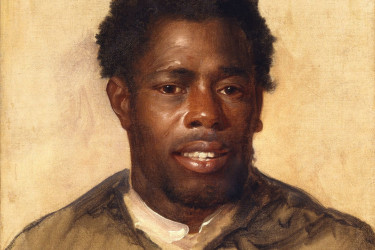
"Head of a Negro" (1777 or 1778), by John Singleton Copley.

The Declaration of Independence’s Debt to Black America

When African Americans allied themselves with the British, the Patriots were enraged, and they acted.

This Guilty Land: Every Possible Lincoln

Abraham Lincoln is widely revered, while many Americans consider John Brown mad. Yet it was Brown’s strategy that brought slavery to an end.

The Douglass Republic

How today's protests are struggling to reclaim the vision of the great abolitionist leader.
American Revolution-era political cartoon showing elites signing trade document at behest of working-class.

Fight For Economic Equality Is As Old as America Itself

Fears of great wealth and the need for economic equality go back to the country’s origins.
The USS Constitution glides through Boston Harbor.
partner

Early Americans Knew Better Than President Trump How To Prioritize Health

A public uprising forced Boston to prioritize fighting smallpox over the economy in 1792.

The Invention of the Police

Why did American policing get so big, so fast? The answer, mainly, is slavery.
Donald Trump giving a speech in front of a large photo of Franklin Delano Roosevelt.

‘The Most Ignorant and Unfit’: What Made America’s Worst Ever Leader?

The real challenge is not simply to replace Trump, but to fix a system that produces, promotes, and protects the toxicity that defines his presidency.
Wanto Co. grocery store with a sign that reads "I Am An American"

Discovering Judith Shklar’s Skeptical Liberalism of Fear

Judith Shklar fled Nazis and Stalinism before discovering in African-American history the dilemma of modern liberalism.
Collage of scenes celebrating the passage of the 15th amendment.

Eric Foner’s Story of American Freedom

Eric Foner has helped us better understand the ambiguous consequences of what were almost always only partial victories.

Jill Lepore on Early American Ideas of Nationalism

"Inevitably, the age of national bootblacks and national oyster houses and national blacksmiths produced national history books."