Person

W.E.B. Du Bois

Related Excerpts

Remembering President Wilson's Purge of Black Federal Workers

Woodrow Wilson arrived at the White House determined to eliminate the gains African-Americans made during Reconstruction.

There's No National Site Devoted to Reconstruction—Yet

The National Parks Service, which preserves many Civil War sites, is finally looking for a way to mark the struggles that defined its legacy.

The Unlikely Paths of Grant and Lee

The two men met at Appomattox. The loser would become a role model, the victor an embarrassment.
Scene from Birth of a Nation.

“A Public Menace”

How the fight to ban "The Birth of a Nation" shaped the nascent civil rights movement.

The Problem of Slavery

David Brion Davis’s philosophical history.

The Massive Liberal Failure on Race, Part III

The Civil Rights movement ignored one very important, very difficult question. It’s time to answer it.
Circus Sideshow, by Georges Seurat, 1887–88.

Unforgettable

W.E.B. Du Bois on the beauty of sorrow songs.
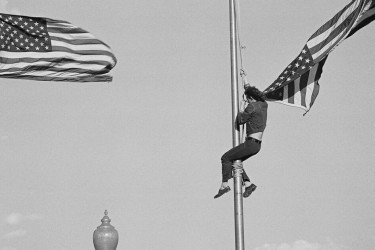
A protestor climbs the flagpole to remove the American flag during an Anti-Vietnam War rally in 1971.

Another Country: Visions of America

The rise of a violent authoritarian state under Trump unveils a deep uncertainty over what America is.
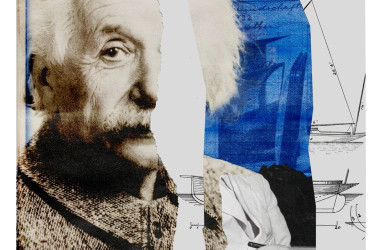
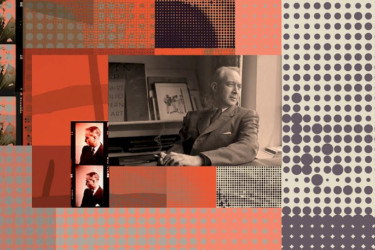
Albert Einstein collage photo with scientific diagrams.

Albert Einstein’s Brilliant Politics

The physicist fought for the promise of a diverse, meritocratic America. We need his optimism today.
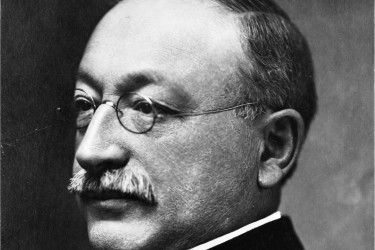
Victor Berger

When the Sewer Socialists Struggled for Racial Equality

A close examination of the writings of Wisconsin's Victor Berger shows that his views on race changed dramatically over time.
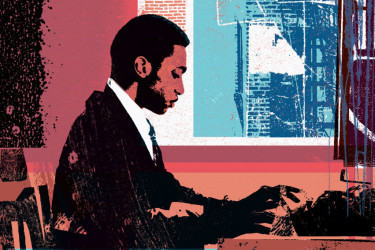
Illustration of Rudolph Fisher sitting and typing.

Renaissance Man

Doctor, writer, musician, and orator: Rudolph Fisher was a scientist and an artist whose métier was Harlem.
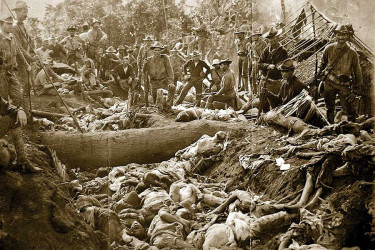
US soldiers posing with the bodies of Moro people after the massacre of Bud Dajo, Jolo Island, Philippines, March 7, 1906.

Massacre Under the Starry Flag

The history of a single photograph reveals how an atrocity in the Philippines was forgotten by its American perpetrators.
A. Philip Randolph.
partner

A. Philip Randolph Lambasts the Old Crowd

A Black socialist magazine urges solidarity and action in 1919.
Collage of photos of Lionel Trilling.

Lionel Trilling and the Limits of Crisis-Thought

Lionel Trilling defends humanism amid crisis culture, warning that obsessing over evil can erode the self and our capacity for moral and creative agency.
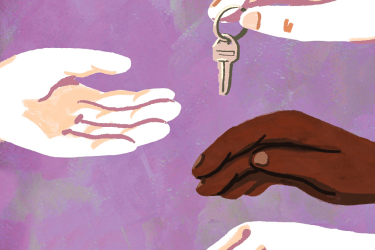
A white hand gives a key to another white hand, bypassing a Black hand.

What We Miss When We Talk About the Racial Wealth Gap

Six decades of civil-rights efforts haven’t budged the racial wealth gap, and the usual prescriptions—including reparations—offer no lasting solutions.
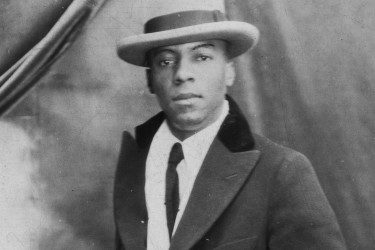
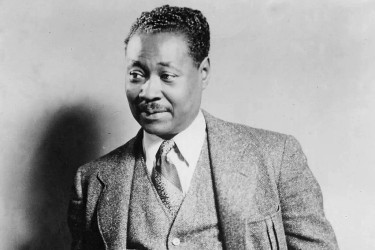
Black and white photograph of Claude McKay

Letters from Claude McKay

Correspondence about writing, travel, and friendship, from 1926 through 1929.
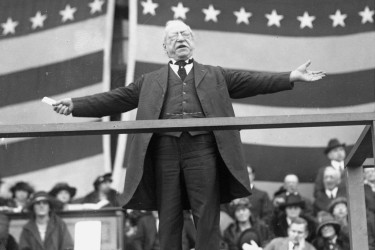
Samuel Gompers the president of the American Federation of Labor in December 1920.

America’s Brutal Capitalist Class Tamed Its Labor Movement

The unique brutality of the US capitalist class bred a labor movement that has often limited itself to being a private insurance provider.
Mannequins model Black fashion ranging from ethnic apparel to suits.

Turning Style Into Power: How the Black Dandy Used Clothing to Challenge Authority

At the Met, "Superfine: Tailoring Black Style" shows how clothing became a way for Black men to assert presence and push back against control.
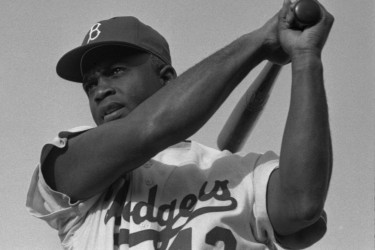
Jackie Robinson.

Out at Home?

Under the Trump administration's book police, Jackie Robinson’s life and actions are considered dangerous memories.
A collage of pages from the National Park service website, including one about Appomattox Court House and one about the Underground Railroad, showing language stricken out since Donald Trump's innauguration in 2025.

Amid Anti-DEI Push, National Park Service Rewrites History of Underground Railroad

Since Trump took office, the park service — charged with preserving American history — has changed how it describes key moments from slavery to Jim Crow.