Menu
Excerpts
Exhibits
Collections
Originals
Categories
Map
Search
Category
Found
On records, artifacts, and their preservation.
Load More
Viewing 331–360 of 550
The Closeting of Carson McCullers
Through her relationships with other women, one can trace the evidence of McCullers’s becoming, as a woman, as a lesbian, and as a writer.
by
Jenn Shapland
via
The Paris Review
on
February 3, 2020
It Was Never About Economic Anxiety: On the Book That Foresaw the Rise of Trump
Samuel Freedman rereads 1975's "Blue-Collar Aristocrats."
by
Samuel G. Freedman
via
Literary Hub
on
January 30, 2020
What We Lost in the Museum of Chinese in America Fire
The question remains whether spaces like MOCA will remain vibrant in a future where notions of community grow more abstract.
by
Hua Hsu
via
The New Yorker
on
January 27, 2020
The 1619 Project and the Work of the Historian
Sean Wilentz wrote a piece opposing the New York Times Magazine's 1619 Project, but his use of Revolutionary-era newspapers as sources is flawed.
by
Joseph M. Adelman
via
The Junto
on
January 23, 2020
Emma Willard's Maps of Time
The pioneering work of Emma Willard, a leading feminist educator whose innovative maps of time laid the groundwork for the charts and graphics of today.
by
Susan Schulten
via
The Public Domain Review
on
January 22, 2020
The Way We Write History Has Changed
A deep dive into an archive will never be the same.
by
Alexis C. Madrigal
via
The Atlantic
on
January 21, 2020
The Fight to Decolonize the Museum
Textbooks can be revised, but historic sites, monuments, and collections that memorialize ugly pasts aren’t so easily changed.
by
Adam Hochschild
via
The Atlantic
on
January 15, 2020
Civil War Soldiers Used Hair Dye to Make Themselves Look Better in Pictures, Archaeologists Discover
Researchers have found hair dye bottles and evidence of a photographic studio at Camp Nelson—a former Union camp.
by
Aristos Georgiou
via
Newsweek
on
December 9, 2019
Buried Treasures
Researching the history of time capsules.
by
Elyse Martin
via
Perspectives on History
on
November 25, 2019
On the Great Secret-Keepers of History
Do archivists have political motivations too?
by
Courtney Taylor
via
Literary Hub
on
November 21, 2019
The Pirate Map That Launched My Career
Oceanographer Dawn Wright on how "Treasure Island" led her to map the bottom of the sea.
by
Dawn Wright
via
CityLab
on
November 15, 2019
The Woolen Shoes That Made Revolutionary-Era Women Feel Patriotic
Calamanco footwear was sturdy, egalitarian, and made in the U.S.A.
by
Kimberly S. Alexander
via
What It Means to Be American
on
November 7, 2019
The Big Data of Big Hair
We investigated a dataset of more than 30,000 high school yearbook photos from 1930–2013 to find out when big hair was at its height.
by
Jan Diehm
,
Elle O'Brien
via
The Pudding
on
November 1, 2019
Gold Diggers on Camera
Creating the myth of the gold rush with the help of daguerreotypists.
by
Jane Lee Aspinwall
via
Lapham’s Quarterly
on
October 28, 2019
The Symbolic Seashell
Collecting seashells is as old as humanity. What we do with them can reveal who we are, where we’re from, and what we believe.
by
Krista Langlois
via
Hakai
on
October 22, 2019
partner
How the Great Pumpkin Became Great
The origins of Linus's pumpkin deity, who "rises out of the pumpkin patch and flies through the air and brings toys to all the children in the world."
by
Cindy Ott
,
Jacqueline Mansky
via
JSTOR Daily
on
October 21, 2019
When Young George Washington Started a War
A just-discovered eyewitness account provides startling new evidence about who fired the shot that sparked the French and Indian War.
by
David Preston
via
Smithsonian Magazine
on
September 23, 2019
The University of Texas’s Secret Strategy to Keep Out Black Students
Long-hidden documents show the school’s blueprint for slowing integration during the civil-rights era.
by
Asher Price
via
The Atlantic
on
September 19, 2019
Chester Harding’s My Egotistigraphy (1866)
Privately published memoir of an American portraitist who grew up in a log cabin and went on to paint presidents and Daniel Boone.
by
Adam Green
via
The Public Domain Review
on
September 10, 2019
The Hidden Story of Two African American Women
An historian discovers the portraits of two women all bound up in the pages of a 19th-century book.
by
Martha S. Jones
,
Kate Clarke Lemay
via
The Conversation
on
September 9, 2019
Please, My Digital Archive. It’s Very Sick.
Our past on the internet is disappearing before we can make it history.
by
Tanner Howard
via
Lapham’s Quarterly
on
September 4, 2019
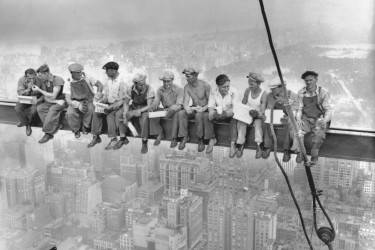
One of the Most Iconic Photos of American Workers is Not What it Seems
But “Lunch atop a Skyscraper,” which was taken during the Great Depression, has come to represent the country's resilience, especially on Labor Day.
by
Jessica Contrera
via
Retropolis
on
September 1, 2019
partner
Pssst, Crop Circles Were a Hoax
In the late 1970s, mysterious circular patterns started showing up in farm fields.
by
Alun Anderson
,
Matt Ridley
,
James MacDonald
via
JSTOR Daily
on
August 21, 2019
Letters of the Damned: Exorcising the Curse of the Petrified Forest
Letters come in each year with pilfered stones from the national park, hoping to break the senders' curse.
by
Hunter Oatman-Stanford
via
Collectors Weekly
on
July 29, 2019
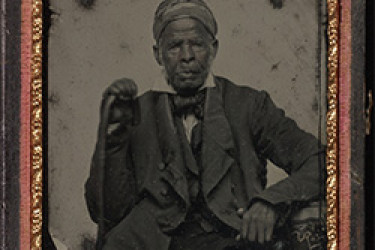
Educated and Enslaved
The journey of Omar Ibn Said.
by
Benny Seda-Galarza
via
Library of Congress
on
July 22, 2019
The World-Class Photography of Ebony and Jet is Priceless History. It's Still Up For Sale.
There's a lot more than money at stake in the impending auction.
by
Allison Miller
via
Perspectives on History
on
July 9, 2019
How the Camera Introduced Americans to Their Heroines
A new show at the National Portrait Gallery spotlights figures including Harriet Beecher Stowe, Lucretia Mott and Margaret Fuller.
by
Meilan Solly
via
Smithsonian Magazine
on
July 9, 2019
An Eight-Second Film of 1915 New Orleans and the Mystery of Louis Armstrong’s Happiness
How could Armstrong, born indisputably black at the height of Jim Crow and raised poor, be so happy?
by
Gwen Thompkins
via
The New Yorker
on
July 8, 2019
Jane Addams, Mary Rozet Smith, And The Disappointments of One-Sided Correspondence
Lost letters between Jane Addams and her best friend leave questions for historians,
by
Stacy Pratt McDermott
via
Jane Addams Papers Project
on
July 1, 2019
A Lost Work by Langston Hughes Examines the Harsh Life on the Chain Gang
In 1933, the Harlem Renaissance star wrote a powerful essay about race. It has never been published in English—until now.
by
Steven Hoelscher
via
Smithsonian Magazine
on
July 1, 2019
Previous
Page
12
of 19
Next