The Invention of the Police

Why did American policing get so big, so fast? The answer, mainly, is slavery.

The Argument of “Afropessimism”

Frank B. Wilderson III sketches a map of the world in which Black people are everywhere integral but always excluded.
Black soldiers in uniform and winter gear pose for a photo at Fort Keogh, Montana, in 1890.

‘America’s Black Dreyfus Affair’ and the Long Battle to Right Teddy Roosevelt’s Wrong

167 Black soldiers were dishonorably discharged from the army in 1906. Two Angelenos corrected the historical record in the 1970s.
An outline of the United States filled with black figures who are outlined by a continuous white line.

"Other": A Brief History of American Xenophobia

The United States often touts itself as a "nation of immigrants," but this obscures the real story.
A portrait of David Ruggles, who opened the first black-owned bookstore in America, between two white men.
partner

The First Black-Owned Bookstore and the Fight for Freedom

Black abolitionist David Ruggles opened the first Black-owned bookstore in 1834, pointing the way to freedom—in more ways than one.

The US Suffragette Movement Tried to Leave Out Black Women. They Showed Up Anyway

Racism and sexism were bound together in the fight to vote – and Black women made it clear they would never cede the question of their voting rights to others.
partner

How Black Women Fought Racism and Sexism for the Right to Vote

African American women played a significant and sometimes overlooked role in the struggle to gain the vote.
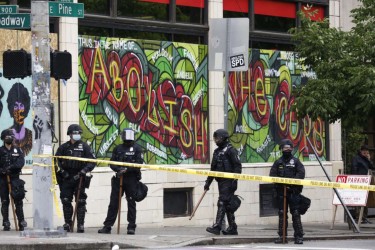
Seattle police dressed in riot gear, standing in front of graffiti that reads "abolish the cops."

Police Reform Hasn't Stopped the Killings Before. It Won't Now Either.

Police reform is a time-honored counter-insurgency measure to quell rebellion.
Trestle on Central Pacific Railroad, by Carleton Watkins, 1877.

A Campaign of Forced Self-Deportation

The history of anti-Chinese violence in Truckee, California, is as old as the town itself.
Crowd of protestors, mostly men, outside of a building

A Summer of Protest, Unemployment and Presidential Politics – Welcome to 1932

The parallels between the summer of '32 and what is happening now are striking.
A statue of a woman and two children, with the photo taken at twilight with the moon in the background.

Mary McLeod Bethune Was at the Vanguard of More Than 50 Years of Black Progress

Winning the vote for women was a mighty struggle. Securing full liberation for women of color was no less daunting
Lithograph of a Black man appealing to liberty and justice.

Dreams of a Revolution Deferred

How African-Americans in Early America celebrated the Declaration of Independence's ideals, even as basic freedoms were denied to them.
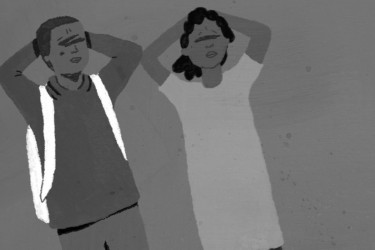
Drawing of a boy and girl holding their hands behind their heads.

The Scars of Being Policed While Black

From unjustified stops of Black teenagers to a device to torment people in custody, racist police brutality runs deep.
partner

Liberal Reform Threatens to Expand the Police Power – Just as it Did in the Past

How calls for “real reforms” have resulted in measures that further shield police from real accountability.
NYPD officers in front of an American flag.

There’s Truth in Numbers in Policing – Until There Isn’t

To hold the police accountable for misconduct, data related to police violence must not only become more accessible, it must also become more reliable.

Asian Americans Are Still Caught in the Trap of the ‘Model Minority’ Stereotype

Generations of Asian Americans have struggled to prove an Americanness that should not need to be proven.
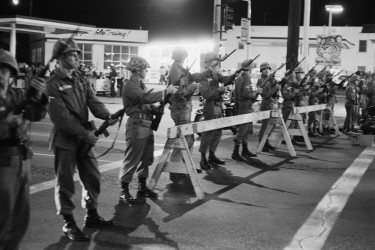
Men with guns in street
partner

How Tear Gas Became a Staple of American Law Enforcement

In 1932, the “Bonus Army” of jobless veterans staged a protest in Washington, DC. The government dispersed them with tear gas.
A photograph of Congressman John Lewis.

The Way of John Lewis

Cynthia Tucker shares her hope that a new generation of activists can learn from Lewis' courageous and peaceful fight for “beloved community.”
Malcom X holding up a crime scene photo of Ronald Stokes's murder.

The Death That Galvanized Malcolm X Against Police Brutality

Decades before protests against mass incarceration galvanized the black freedom struggle, Malcolm indicted the entire justice system as racist.
Black and white photo of black child with his hands up, with police wielding weapons behind him
partner

The 1968 Kerner Commission Report Still Echoes Across America

Anger over policing and inequality boiled over more than 50 years ago, and a landmark report warned that it could happen again.

The Racist History of Curfews in America

The restrictions imposed during recent racial justice protests have their roots in efforts to “contain” Black Americans. 
A lie-in in the road outside of a Pittsburgh jail. Many activists lay in both lanes of the road, some holding signs.
partner

Bail Funds Are Having a Moment in 2020

But today’s activism reflects longstanding commitments to freedom.
Lithograph of a New York City street in 1830, bustling with pedestrians and horse-drawn carriages.

The Black New Yorker Who Led the Charge Against Police Violence in the 1830s

David Ruggles' fight against the "kidnapping club" in the 1830s shows that police violence has been part of America's DNA from its earliest days.
People at a Black Lives Matter protest

The Power of Black Lives Matter

How the movement that’s changing America was built and where it goes next.
Mugshot of Eugene Debs

Eugene Debs Was an American Hero

He forced the country to engage in a three-year conversation about the meaning of free speech that shaped policy and law after World War I.

The History of the “Riot” Report

How government commissions became alibis for inaction.
A row of police officers with guns

Police Have Long History of Responding to Black Movements by Playing the Victim

Amid calls to defund police, cops are framing themselves as victims. We must remember who is really being brutalized.
Protester holding a "Defund the Police" sign.

Defund the Police

Protest slogans and the terms for debate.
Two posterboards covered in red handprints that read "Black Lives Matter" and "No Justice, No Peace."

Stop Comparing Today’s Protests to 1968

There are superficial similarities, but what we’re seeing now is something completely new.

America Begins to See More Clearly Now What Its Black Citizens Always Knew

The present round of protest is different. The participants are people of every race, ethnicity, sex, age, and religion.