From left, actors Bernnadette Stanis, John Amos and Ja'Net Dubois accept the Impact Award for “Good Times” at the 2006 TV Land Awards in Santa Monica, Calif. (Kevin Winter/Getty Images)
partner

Television Is Already Moving to Address Racism — But Will the Effort Last?

Past network efforts to address racism faded as uprisings stopped dominating headlines.
A wanted poster that reads "Wanted by the people: murder, aggravated assault and battery, denying civil rights, perjury. Brinley Evans, Thomas Lyons."

Wanted: An End to Police Terror

The pursuit of justice has been defined by a rote binary of punished in a cage versus unpunished and free.

The Struggle to Abolish the Police Is Not New

Prison and police abolition were key to the thinking of many midcentury civil rights activists. Understanding why can help us ask for change in our own time.
Two men talking, one with an American flag and one with a 'thin blue line' flag.

The Short, Fraught History of the ‘Thin Blue Line’ American Flag

The controversial version of the U.S. flag has been hailed as a sign of police solidarity and criticized as a symbol of white supremacy.
White state militia man with rifle confronting a Black man in a U.S. military uniform, while others look on.

How Racist Policing Took Over American Cities

"The problem is the way policing was built," historian Khalil Muhammad says.

It Really Is Different This Time

Two dozen experts consider the George Floyd protests in light of protests past.

No Justice, No Peace

To understand the slogan's meaning, consider the words of Martin Luther King, who saw the riots of the 1960s as not revolutionary enough.

10 Experts on Where the George Floyd Protests Fit Into American History

Many are looking to history for clues about how to understand the evolving moment. Here's what to know.

Black Women’s 200 Year Fight for the Vote

For two centuries, black women have linked their ballot access to the human rights of all.

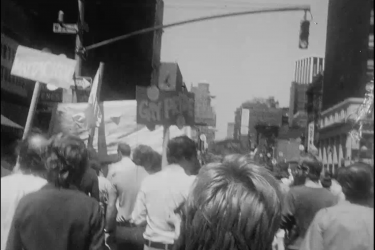
How Today’s Protests Compare to 1968, Explained by a Historian

Heather Ann Thompson explains what’s changed and what has stayed the same.
Gay Pride march from "Gay and Proud" video

The History of Pride

How activists fought to create LGBTQ+ pride.
NOLA Resistance Oral History Project title card featuring images of the civil rights movement.

NOLA Resistance Oral History Project

This oral history project records testimony from individuals who were active in the fight for racial equality in New Orleans between 1954 and 1976.

Confederate Monuments Haunt American Democracy

Why Southerners protesting structural racism in the criminal justice system have turned time and again to the monuments in their communities.

The Double Standard of the American Riot

The nationwide protests against police killings have been called un-American by critics, but rebellion has always been used to defend liberty.
Drawing of four red fists intersecting the U.S. Capitol building

The Rebirth of Red Power

The tribal sovereignty movement from the late 1960s never really ended. To find the future of the Native left, look to the past.

The Minneapolis Uprising in Context

A proper understanding of urban rebellion depends on our ability to interpret it not as a wave of criminality, but as political violence.
Vic Reynolds, director of the Georgia Bureau of Investigation, speaks at a news conference.
partner

The Link Between the Video of Ahmaud Arbery’s Death and Lynching Photos

How lynching images are testimonies to the inaction of the white justice system.
Holes punched in the Constitution.

There’s No Historical Justification for One of the Most Dangerous Ideas in American Law

The Founders didn’t believe that broad delegations of legislative power violated the Constitution, but conservative originalists keep insisting otherwise.
Formal photo of twelve African American naval officers.

The Forgotten Story of How 13 Black Men Broke the Navy’s Toughest Color Barrier

During World War II, a group of African American sailors was chosen to integrate the Naval Officer Corps, forever changing what was possible in the U.S. Navy.
A group of men gather at a headquarters of the Communist Party USA following a protest demanding pay raise and an end to police brutality, US, circa 1920. Hirz / Archive Photos / Getty

How McCarthyism and the Red Scare Hurt the Black Freedom Struggle

Union activists linked the struggle for black equality in housing, employment, and at the ballot box, to the broader struggle against capitalist domination.
partner

Ye Olde Morality-Enforcement Brigades

The charivari (or shivaree) was a ritual in which people on the lower rungs of a community called out neighbors who violated social and sexual norms.

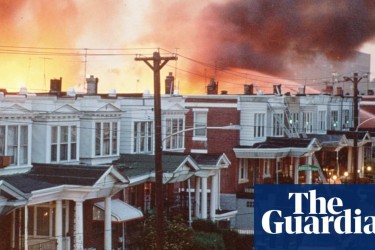
The Day Police Bombed a City Street: Can Scars of 1985 Move Atrocity be Healed?

An airstrike killed 11 people, including five children, in an assault on a Philadelphia black liberation group. Now a reconciliation effort is under way.
An etching of a woman and her "female husband."

May We All Be So Brave as 19th-Century Female Husbands

Far from being a recent or 21st-century phenomenon, people have chosen, courageously, to trans gender throughout history.

The Inner Life of American Communism

Vivian Gornick’s and Jodi Dean’s books mine a lost history of comradeship, determination, and intimacy.
Prison security guard wearing a mask.
partner

The Policy Mistakes From the 1990s That Have Made Covid-19 Worse

Being tough on crime and cutting benefits from the poor left millions more susceptible to disease.

Kent State and the War That Never Ended

The deadly episode stood for a bitterly divided era. Did we ever leave it?
Mugshots of female terrorists

The Dark History of America’s First Female Terrorist Group

The women of May 19th bombed the U.S. Capitol and plotted Henry Kissinger’s murder. But they’ve been long forgotten.
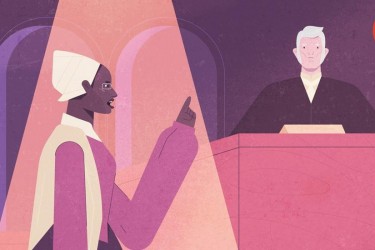
Graphic of Sojourner Truth testifying in court.

The Electrifying Speeches of Sojourner Truth

Daina Ramey Berry details the life of the outspoken activist Sojourner Truth and her legendary speaking tour.

Typhoid Mary Was a Maligned Immigrant Who Got a Bum Rap

Now, she's become hashtag shorthand for people who defy social distancing orders.

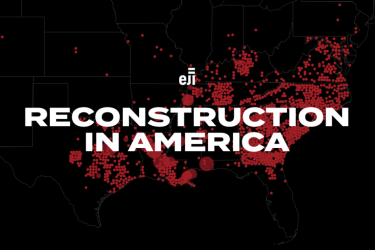
Reconstruction in America

Mass lynchings of Black people following the Civil War.