Menu
Excerpts
Exhibits
Collections
Originals
Categories
Map
Search
Category
Justice
On the struggles to achieve and maintain it.
Load More
Viewing 2,011–2,040 of 2,052
Mohawks, Mohocks, Hawkubites, Whatever
Down and dirty in eighteenth-century London and Boston.
by
Roger D. Abrahams
via
Commonplace
on
January 1, 2008
Don’t Despair About the Supreme Court
In 2005, Howard Zinn explained why it was naive to depend on the Court to defend the rights of marginalized Americans.
by
Howard Zinn
via
The Progressive
on
October 21, 2005
Supreme Court Cronyism
With the nomination of Harriet Miers to the Supreme Court, George W. Bush restarts a long and troubled tradition.
by
David Greenberg
via
Slate
on
October 5, 2005
Civil Unions in the City on a Hill: The Real Legacy of "Boston Judges"
For the English Puritans who founded Massachusetts in 1630, marriage was a civil union, a contract, not a sacred rite.
by
Mark A. Peterson
via
Commonplace
on
April 2, 2004
Bringing Rapes to Court
How sexual assault victims in colonial America navigated a legal system that was enormously stacked against them.
by
Sharon Block
via
Commonplace
on
April 1, 2003
The House of the Prophet
Martin Luther King Jr. was the galvanizing voice of the civil rights struggle, an uncompromising, complicated figure who soared in the pulpit.
by
Kwame Anthony Appiah
via
New York Review of Books
on
April 11, 2002
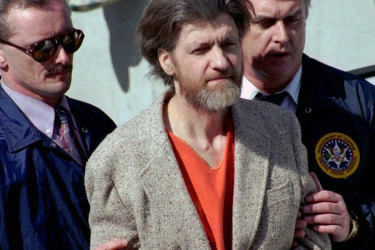
Harvard and the Making of the Unabomber
Purposely brutalizing psychological experiments may have confirmed Theodore Kaczynski’s still-forming belief in the evil of science while he was in college.
by
Alston Chase
via
The Atlantic
on
June 1, 2000
Pursuing the Pursuit of Happiness
Traditional Supreme Court precedent may depend too much on substantive due process to safeguard human rights.
by
Laurence H. Tribe
via
New York Review of Books
on
September 24, 1998
partner
Making Whiteness
How a historian's family history informed her professional quest to unpack the stories white Southerners told about themselves.
by
In Black America
via
American Archive of Public Broadcasting
on
September 1, 1998
Abortion in American History
How do ideological debates on gender roles influence the abortion debate?
by
Katha Pollitt
via
The Atlantic
on
May 1, 1997
To Keep and Bear Arms
A challenge to the "Standard Model" scholars who hold that the Second Amendment protects individual gun rights.
by
Garry Wills
via
New York Review of Books
on
September 21, 1995
The American Dilemma
The moral contradiction of a nation torn between allegiance to its highest ideals and awareness of the base realities of racial discrimination.
by
David Brion Davis
via
New York Review of Books
on
July 16, 1992
partner
Black Champions: Interview with Lee Elder
His experiences with racism and golf, from death threats in Memphis to breaking the sporting color barrier in South Africa.
via
American Archive of Public Broadcasting
on
July 16, 1985
partner
Black Champions: Interview with Mack Robinson
Olympic track and field athlete reflects on the exclusion of African Americans from professional sports and the role his brother Jackie played in changing that.
via
American Archive of Public Broadcasting
on
May 21, 1985
partner
Black Champions: Interview with Jim Brown
On inclusion of African American athletes in college sports.
via
American Archive of Public Broadcasting
on
January 19, 1985
partner
Black Champions: Interview with Curt Flood
On traveling through the Jim Crow south as the sole Black athlete on a baseball team.
via
American Archive of Public Broadcasting
on
November 16, 1984
The Unacknowledged Lesson: Earl Warren and the Japanese Relocation Controversy
Though best known for his dedication to civil rights as Chief Justice, Earl Warren was a key figure behind Japanese internment in California - and stood by it.
by
G. Edward White
via
VQR
on
October 15, 1979
The Shot That Echoes Still
James Baldwin's dispatch from MLK's funeral foreshadowed an America we may never escape.
by
James Baldwin
,
Michael Eric Dyson
via
Esquire
on
April 4, 1972
Watching the Watchers
Confessions of an FBI special agent.
by
Robert Wall
via
New York Review of Books
on
January 27, 1972
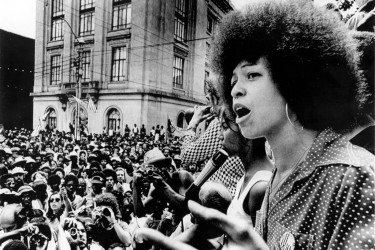
An Open Letter to My Sister, Miss Angela Davis
Since we live in an age in which silence is not only criminal but suicidal, I have been making as much noise as I can.
by
James Baldwin
via
New York Review of Books
on
January 7, 1971
partner
The Art of Stealing Human Rights
Native peoples face similar struggles with the federal governments in the U.S. and in Canada.
by
Radio Free Alcatraz
via
American Archive of Public Broadcasting
on
January 3, 1970
partner
Who Is the Black Cop?
What is it like to be a Black police officer, and how does the Black community feel about these officers?
by
Black Journal
via
American Archive of Public Broadcasting
on
June 23, 1969
Martin Luther King Jr.’s Call For a Poor People’s Campaign
In early 1968, the activist planned a massive protest in the nation’s capital.
by
Martin Luther King Jr.
via
The Atlantic
on
March 20, 1968
partner
James Baldwin Comments on the Kerner Commission
The Kerner Commission was credited with exposing systemic racism that inspired resistance in Black communities. James Baldwin argued that it stated the obvious.
by
Public Broadcast Laboratory
via
American Archive of Public Broadcasting
on
March 3, 1968
The Crisis in America’s Cities
Martin Luther King Jr. on what sparked the violent urban riots of the “long hot summer” of 1967.
by
Martin Luther King Jr.
via
The Atlantic
on
August 15, 1967
A Report from Occupied Territory
These things happen, in all our Harlems, every single day. If we ignore this fact, and our common responsibility to change this fact, we are sealing our doom.
by
James Baldwin
via
The Nation
on
July 11, 1966
The Selma March
On the trail to Montgomery.
by
Renata Adler
via
The New Yorker
on
April 10, 1965
Let Justice Roll Down
"Those who expected a cheap victory in a climate of complacency were shocked into reality by Selma."
by
Martin Luther King Jr.
via
The Nation
on
March 16, 1965
How Much Had Schools Really Been Desegregated by 1964?
Ten years after 'Brown v. Board of Education', Martin Luther King Jr. condemned how little had changed in the nation's classrooms.
by
Martin Luther King Jr.
via
The Atlantic
on
May 7, 1964
‘I Can’t Accept Western Values Because They Don’t Accept Me’
Revolution, the civil rights movement, and African-American identity.
by
James Baldwin
,
Robert Penn Warren
via
Literary Hub
on
April 27, 1964
Previous
Page
68
of 69
Next