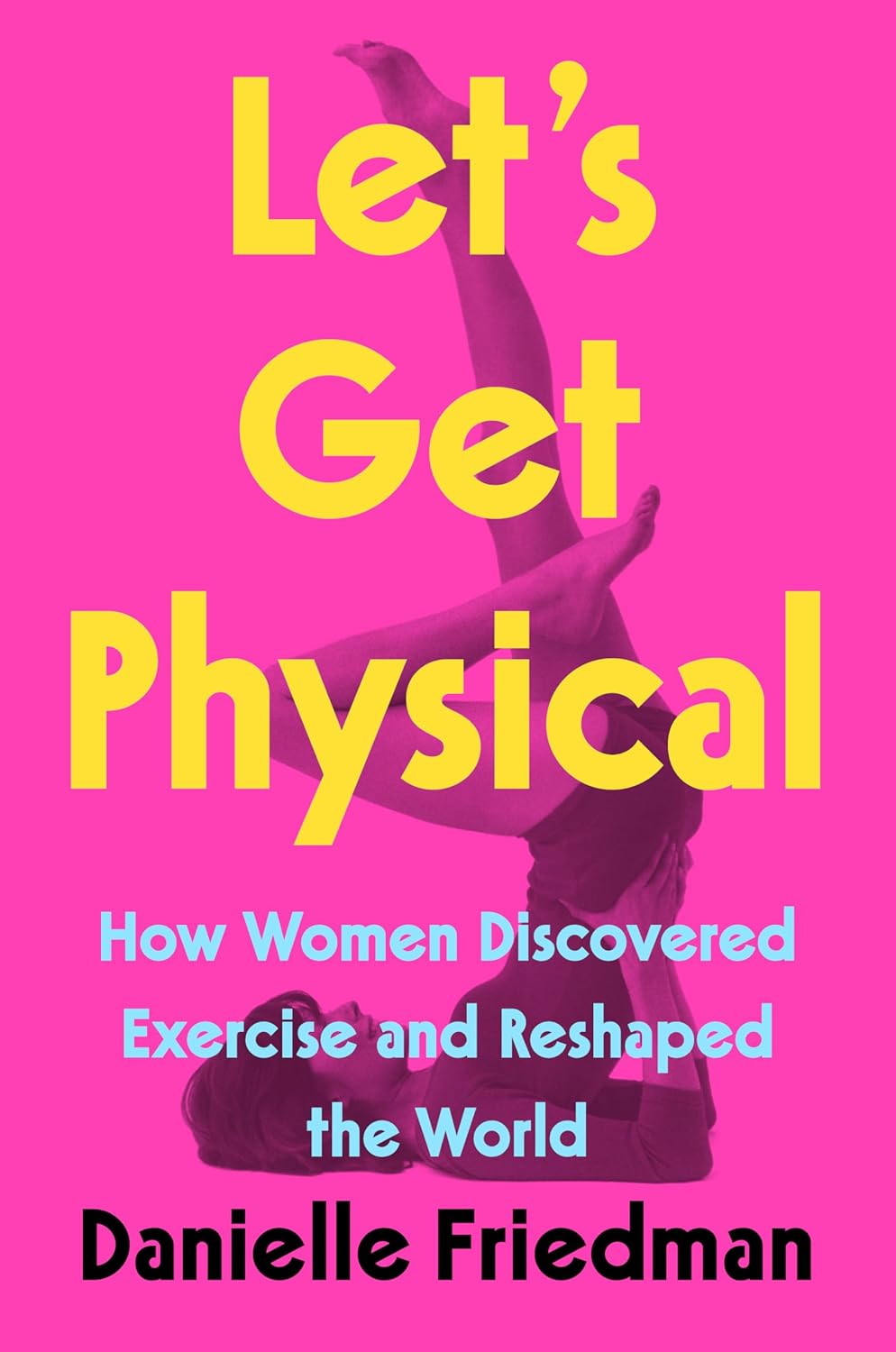
Friedman clearly views the telling of this history as a feminist project. As she writes, “American women’s fitness history is more than a series of misguided ‘crazes.’ It’s the story of how women have chosen to spend a collective billions of dollars and hours in pursuit of health and happiness. In many ways, it’s the story of what it has meant to be a woman over the past seven decades.” She is right that exercise is a significant concern for many women, and so there is a feminist stake in refusing to dismiss or overlook its history. But the fact that there is a compelling feminist argument for studying the history of women’s fitness does not make that history, in and of itself, feminist—something Friedman’s book struggles to grasp.
While Prudden’s prison program seems like a clear indication that fitness has long been a tool to discipline and control women, Friedman takes a different view. She writes that “when women first began exercising en masse, they were participating in something subversive: the cultivation of physical strength and autonomy,” which, in her view, leads nearly inexorably to inner strength and autonomy. Let’s Get Physical presents an overwhelmingly positive picture of the role of fitness in women’s lives—the book’s main villains are barriers to women’s participation in exercise, in the form of racism, sexism, and, occasionally, capitalism. Friedman notes, for instance, that “many poor Americans were denied the leisure time, means, and space to exercise.” It was for this reason, she writes, that “fitness developed a reputation as a white person’s pursuit,” and that for decades, fitness clubs refused admittance to Black prospective members.
Friedman does mention the unattainable standards of physical perfection pushed on women by America’s fitness culture, but more often than not she offers exercise itself as an antidote. The idea that women start working out because they want to change their bodies but keep exercising because they love how it makes them feel—their hang-ups falling away as they dance and run and pelvic tilt—recurs over and over again throughout the book. In the introduction, Friedman recounts her own experience taking Pure Barre classes. She was drawn there, initially, by the promise of a body like a prototypical ballerina’s, but, after several classes, she found something else:
The workout made me strong in parts of my body I hadn’t realized were weak. It allowed me, for the first time in my life, to carry grocery bags without stopping to rest after three minutes. I didn’t look like a ballerina, but I felt like one—light on my feet, energized, connected with my body in a totally new way.