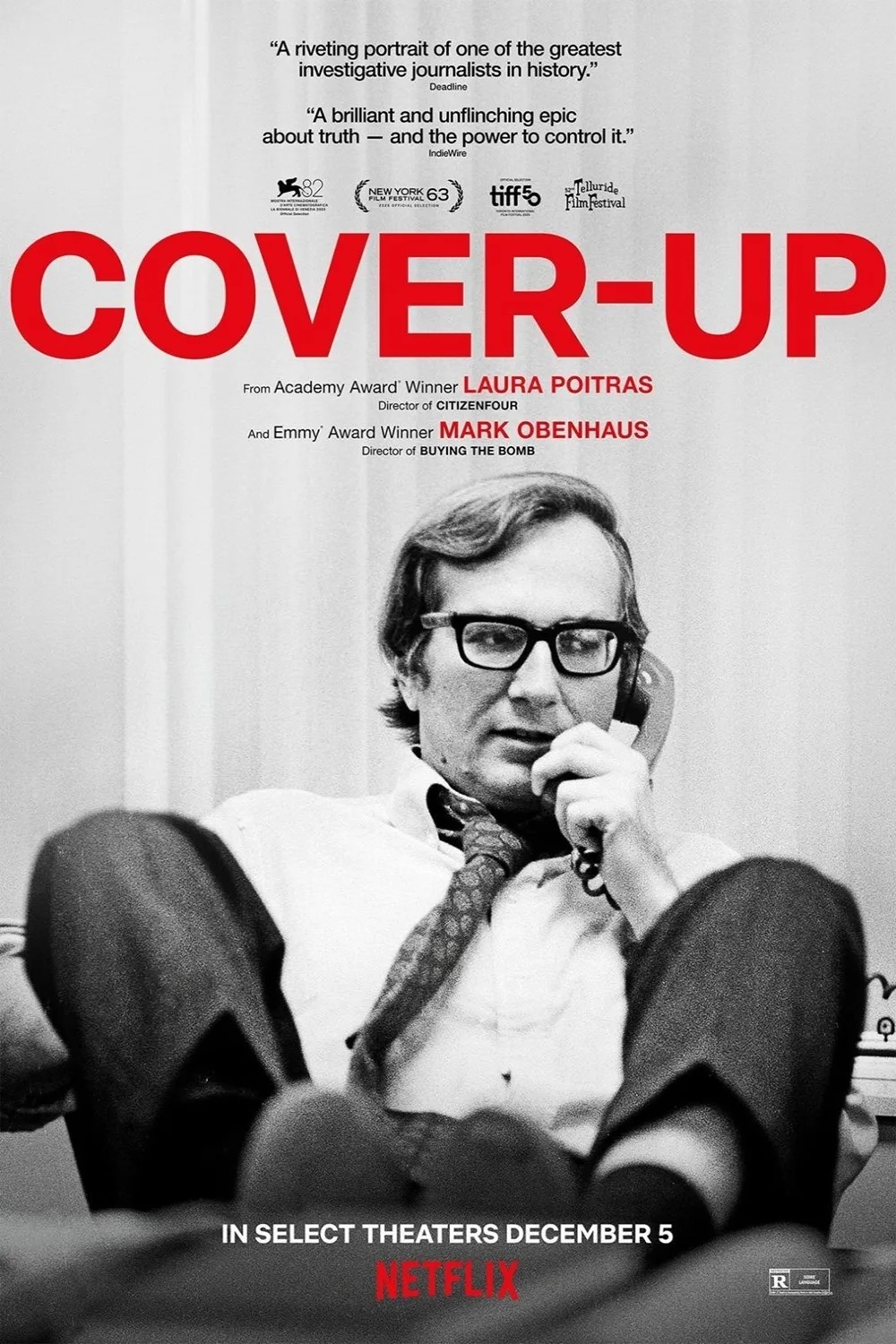
Ed Rampell: What attracted you to make a film about Seymour Hersh?
Laura Poitras: Seymour Hersh is a legend of investigative journalism. He has been for the last half century breaking some of the most important stories, exposing American atrocities, government lies, cover-ups, coup attempts, assassination attempts. The list is really long. He’s been somebody who has inspired my work for as long as I’ve been doing documentary filmmaking.
This has been a project that I originally approached Sy about twenty years ago. I just said, “Come on, Sy, like let’s make the movie.” He was very gracious, very charming, very funny, and said, “No f-cking way.”
Ed Rampell: Let’s get into the nitty-gritty of the highlights that Cover-Up covers. Hersh’s first big national story was exposing the My Lai massacre. What did Hersh find out and how did he do it?
Laura Poitras: Sy cut his teeth as a journalist in Chicago at the City News Bureau and then got a job at the Associated Press (AP) in Chicago. Did Civil Rights reporting, which is very interesting. Then was assigned to the Pentagon in Washington, DC, which he sort of laughs about: “The Pentagon probably regrets that.” He quickly learned what the government was saying about the [Vietnam] war were lies. So, he became increasingly disillusioned, increasingly skeptical, and he also started working with people who were part of the antiwar movement.
He quite the AP, he actually briefly joined the antiwar campaign of [Senator] Eugene McCarthy, he was its spokesperson and press secretary for several months because it was a way to try to tell the public about what’s happening with this war. He was obsessed with it. He then quits Eugene and then was working freelance at an office down the hall from Ralph Nader, and he just gets a tip.
And the tip says there’s going to be a court-martial. There’s a soldier in the Army who’s going to get court-martialed. No name, no details, something about somebody shooting people up, but not really specifics. His instincts told him he needed to follow this story — and he did. He went to the Pentagon, talked to a general, got the name [Lieutenant William] Calley, then tracked down his lawyer [George W. Latimer]. Sy describes the lawyer taking out the charge sheet and he sees there’s a massacre of civilians.