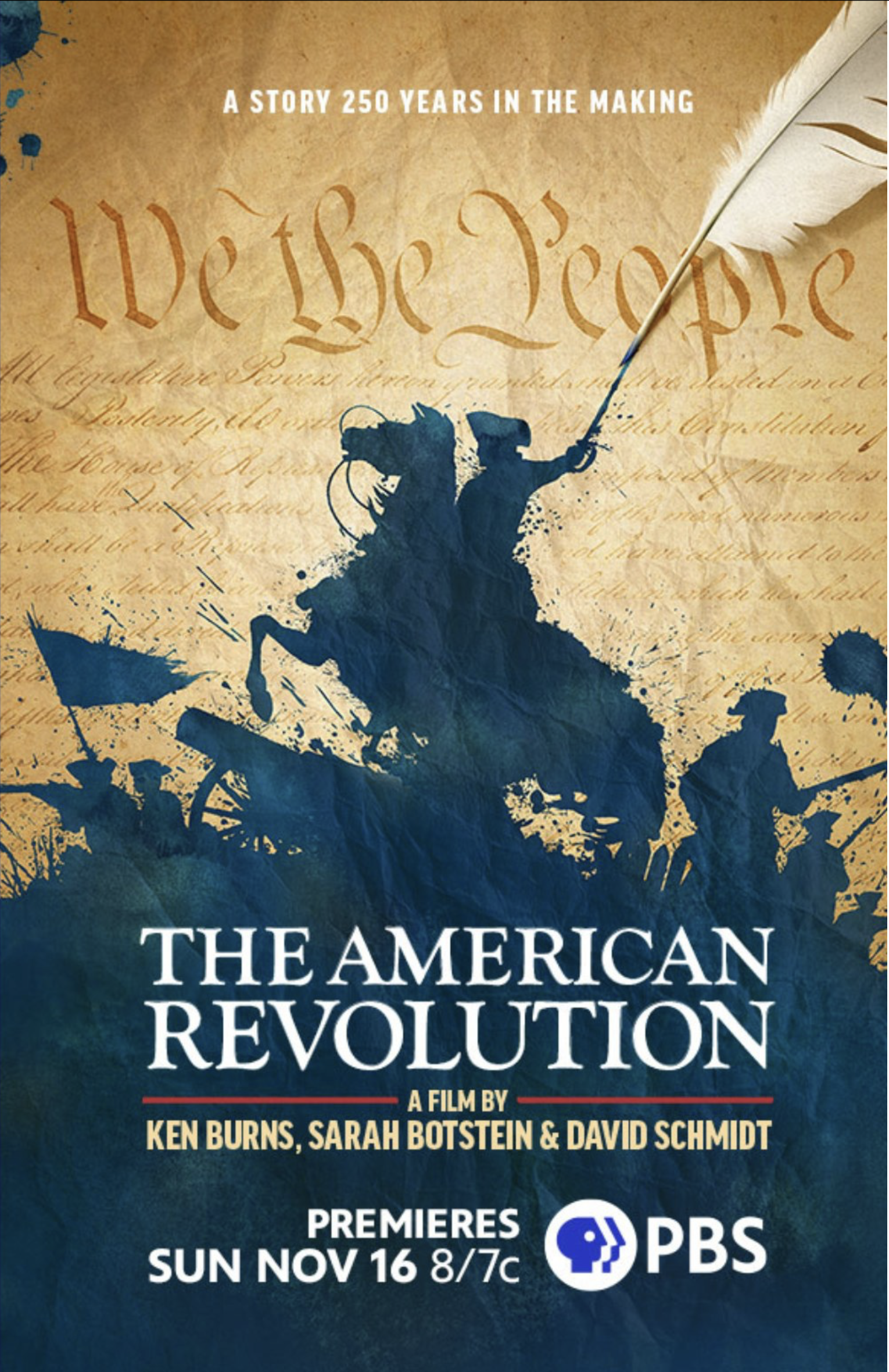
“An Asylum for Mankind,” the second episode of Ken Burns’s documentary The American Revolution, begins in the immediate aftermath of the Battles of Lexington and Concord. Over the span of two hours, Burns (and his co-directors, Sarah Botstein and David Schmidt) march viewers from the Patriot victory at Fort Ticonderoga through the Battle of Bunker Hill, the burning of Falmouth, Lord Dunmore’s Proclamation, the Battle of Quebec, the publication of Thomas Paine’s Common Sense, and the ravages of smallpox and typhus, finally arriving at the Declaration of Independence.
Burns has not been modest about the stakes of his project, describing the American Revolution as “the most important event since the birth of Christ.”[1] Burns and his co-directors, unfortunately, don’t manage to make it feel that way.
Instead, “An Asylum for Mankind” presents the American Revolution as a sedate series of events and dates. Swells of music, tastefully framed shots of reenactors, and quotations devoid of context or explication glide viewers effortlessly through the imperial crisis and the beginning of the Revolutionary War, while giving little consideration to what propelled British colonists to wage a civil war within their Empire.
As historian William Hogeland explains at the beginning of the episode, “Independence was not, in any way, officially on the table as a goal of the Americans at that point. The idea of independence was still controversial.” One hundred and twenty minutes later, Burns and his codirectors depict the members of the Second Continental Congress agreeing to “mutually pledge to each other our Lives, our Fortunes and our sacred Honor” by declaring their freedom from Great Britain. But the intervening hours neglect to explain why the colonists underwent this world-historical change of heart.
Analyzing why things happen means reckoning with contingency—that is, with the possibility that things might have turned out differently than they did. Burns, Botstein, and Schmidt emphasize the importance of contingency in military matters, but they show no real appreciation of contingency in the course of political events. In battle after battle, ubiquitous red and blue animated arrows compare what the generals planned with what actually transpired. In contrast, the filmmakers frame the thirteen colonies’ route towards political independence as a stately parade march.