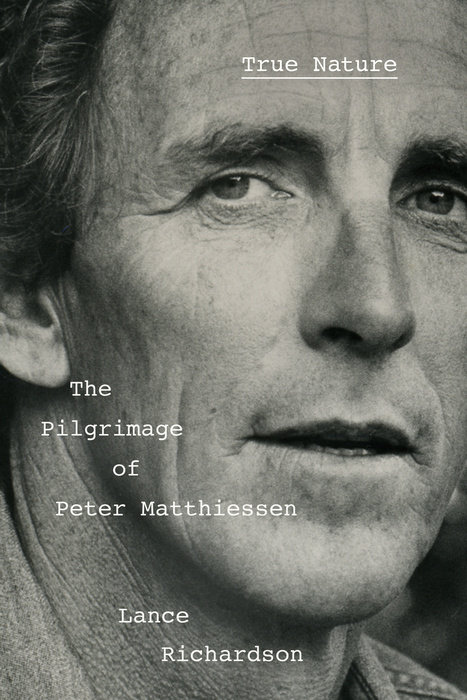
INTERVIEWER:
What led him from spying to starting a magazine?
LANCE RICHARDSON:
The problem with Matthiessen’s cover soon became clear—the labor of a writer is pretty invisible to the outside world. It looks like we’re just sitting inside and not doing anything at all. Matthiessen’s handler told him he needed a visible profession. And one day in one of the cafés he runs into Harold “Doc” Humes, another American who was running a magazine called the Paris News Post, which he had acquired for six hundred bucks, because that was the trend among expats in postwar Paris. Everyone had a little magazine going in that time—there was Merlin, Points, Zero.
Humes was a real character, a bit of a loose cannon. He was wearing a cape when Matthiessen saw him at the café that day. He brought on Matthiessen as his fiction editor. But Matthiessen saw the Paris News Post as a lightweight endeavor. He suggested one day to Doc that they flick it off and make something better. Doc jumped at the idea—or, if you take his word for it, it was really his idea, and he planted it in Matthiessen’s head. Peter didn’t want to be the top editor, so he phoned up his friend George Plimpton, whom he’d known since they were children on the Upper East Side. Plimpton was in Cambridge, England, at the time, about to graduate, not sure what he was going to do with his life. And he seized the opportunity to come over to Paris and start editing this new magazine, with Matthiessen still on as the fiction editor.
INTERVIEWER:
So, in a funny way, it was really the fact that writing is far too solitudinous an activity that gave us The Paris Review. Along with the CIA, of course. Matthiessen was intimately involved with choosing work for the first issues—he really did two jobs at once. I mean, it wasn’t like he was phoning it in at the magazine. But did the CIA ever give The Paris Review money?
LANCE RICHARDSON:
The question of whether the CIA ever directly funded The Paris Review is an incredibly complicated one. The editors were all raising money to run the magazine, canvassing all their parents’ friends. Julius Fleischmann, of the instant-yeast family, was one of Matthiessen’s father’s friends. He and Matty Matthiessen would drink highballs on boats down in the Caribbean together. Fleischmann was a well-known philanthropist and arts patron, but it came out later that he was also a frontman for the CIA. So it’s hard to say, when he gave money to the Review, if it was his own money or if he was funneling it to the magazine through the Farfield Foundation, which the agency used to fund pro-Western propaganda.