Filter by:

Filter by published date

Viewing 31–60 of 70 results. Go to first page
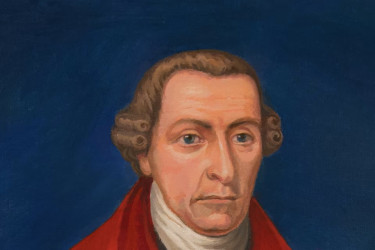
Portrait of Patrick henry wearing a red robe.

No One Gave a Speech Like Patrick Henry

Henry’s fiery oratory turned words into revolution, merging faith, emotion, and democracy to help speak a nation into being.
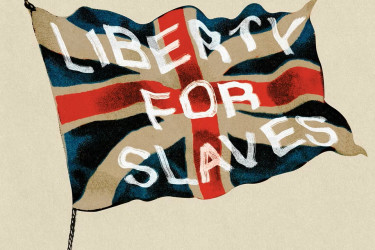
British flag with writing that says, "Liberty for Slaves."

The Black Loyalists

Thousands of African Americans fought for the British—then fled the United States to avoid a return to enslavement.
Painting of Troops, an American Flag and Eagle.

Echoes of Lexington and Concord

The 250th anniversary of "the shot heard round the world" is a reminder of the rights the Patriots fought for.
The ruins of Ft. Ticonderoga, and a note left in a knapsack a soldier carried in battle there.

A Knapsack’s Worth of Courage

Now, and for some years to come, we will need a lot less Paul Weiss, and a lot more Benjamin Warner.
An 1851 painting of Patrick Henry speaking to the Virginia House of Burgesses.

Discover Patrick Henry’s Legacy, Beyond His Revolutionary ‘Give Me Liberty or Give Me Death’ Speech

Delivered 250 years ago, the famous oration marked the Henry’s influence. The politician also served in key roles in Virginia’s state government.
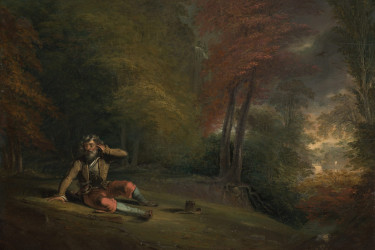
"Rip Van Winkle Awaking from His Long Sleep," painting by Henry Inman (1823).

Bewilderment as a Way of Understanding America’s Present – and Past

Circumstances in which people are feeling extreme disorientation are potent breeding grounds for people who are willing to exploit it in moments of crisis.
The American Flag, the Declaration of Independence, the Constitution, and a Jewish Star with Hebrew words.

The Spirit of '76: A Jewish Perspective on the American Revolution

What was “exceptional” about the American Revolution wasn’t so much the creation of a single republic but the immediate opportunity it provided for action.
Washington crossing the Delaware painting by Emmanuel Leutze.

What Freedom Meant to the Black Soldier Who Rowed Across the Delaware

The enslaved Prince Whipple acutely felt the contradiction between American ideals and his condition.
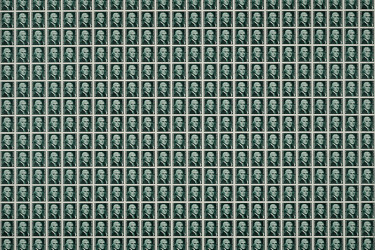
A sheet of Thomas Jefferson stamps.
partner

Thomas Jefferson Fights for the Metric System

A story of math and political stasis.
Image of a man distributing newspapers at a post office.
partner

The Post Office and Privacy

We can thank the postal service for establishing the foundations of the American tradition of communications confidentiality.
A presidential portrait of George Washington.

The Enduring Power of Purim

Since colonial times, the Book of Esther has proved a powerful metaphor in American politics.
Continental Congress voting for independence.

Mother’s Milk of the Revolution

Right from the beginning, a commercial spirit and the wealth it generated were essential to creating and constituting America.
Cover of essays by John Dickinson.

Principled Resistance and the Trouble with Tea

For what did these Americans endure such painful hardship and sacrifice? For what were they taking such a significant stand? Surely, it wasn’t just about tea!
Destruction of tea in the harbor and text protesting the Tea Act.

The Many Myths of the Boston Tea Party

Contrary to popular belief, the 1773 protest opposed a tax break, not a tax hike. And it didn't immediately unify the colonies against the British.
Join, or Die , a 1754 political cartoon by Benjamin Franklin.

A Shotgun Wedding

Barely-disguised hostilities sometimes belied the rebels’ declared identity as the United States of America.
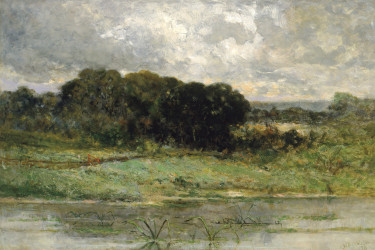
Swale Land, painting by Edward Mitchell Bannister, 1898, depicting nature.

Vacant Unsettled Lands

American thinkers consider what the already occupied West could fund.
The cover of "Religion and the American Revolution: An Imperial History."

An “Imperial Bridge” Between Britain and the North American Colonies

How British protestantism connected colonies and empire until the rupture of the American Revolution.
Artwork of Congress on July 4, 1776

Eighteenth Century Track Changes: Uncovering Revisions in Founding Fathers’ Documents

Let’s consider the significance and responsibility of outlining, drafting, and shaping our nation as the Founding Fathers put pen to paper.
Marine, eighteenth century. Smithsonian American Art Museum, bequest of Mabel Johnson Langhorne.

Quality Insurance Purposes

Insuring against the cost of insurance itself in Revolutionary-era America.
Black and white lithograph depicting the Founders signing the Declaration of Independence.

Have Americans Got George III All Wrong?

George III was a model monarch, whose reputation finally deserves rehabilitation a quarter of a millennium later.
President Madison ending the Embargo Act cartoon

James Madison and the Debilitating American Tendency to Make Everything About the Constitution

The U.S. Constitution was the reason for Madison and Hamilton's breakup.

Remembered for the Wrong Reason?

Which personality of the American Revolution or the founding era is remembered for the wrong reasons, and why?
Map of Nova Scotia

Imagining Nova Scotia: The Limits of an Eighteenth-Century Imperial Fantasy

Colonial planners saw Nova Scotia as a blank space ripe for transformation.
Abstract painting titled 'Constellation' by Helen Gerardia

A New Planet in the System

Early Americans conscripted the universe into their nation-building project.
Newspaper with "Join or Die" slogan

Join, Or Die: Why Did It Have To Be Snakes?

Revolutionary Americans adopted native snakes as symbols for their cause. Why?
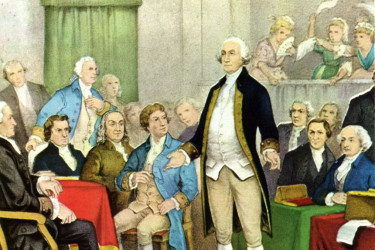
Drawing ofGeorge Washington addressing the Continental Congress.

‘George Washington’ Review: Our Founding Politician

Washington was a savvy packager of his own personal virtues. He knew that if you don’t engage in a bit of self-aggrandizement, you lose.

Minority Rule Cannot Last in America

It never has.
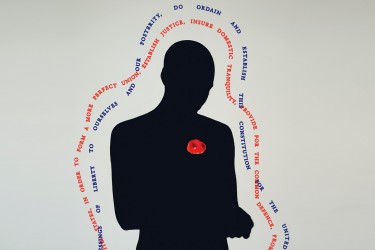
Outline of a person holding a poppy, surrounded by the Constitution's preamble.

The Flawed Genius of the Constitution

The document counted my great-great-grandfather as 3/5 of a free person. But the Framers don’t own the version we live by today. We do.

Five Myths About the U.S. Postal Service

It’s not obsolete, and it’s not a business.
partner

The Revolutions

Ed Ayers visits public historians in Boston and Philadelphia and explores what “freedom” meant to those outside the halls of power in the Revolutionary era.

Filter Results:

Suggested Filters:

Idea

Person