Filter by:

Filter by published date

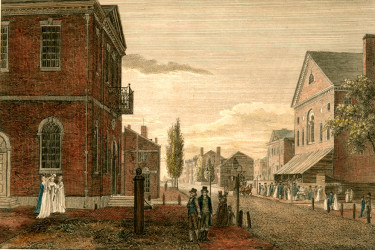
A painting of Congress Hall and the New Theater in colonial Philadelphia.

The Mutiny of 1783

America’s only successful insurrection.
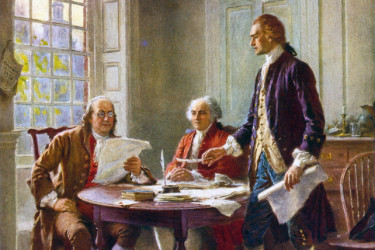
Benjamin Franklin reading a draft of the Declaration of Independence.

The Evolution of the American Declaration of Independence

The Declaration drew on Enlightenment ideas to assert equality, justify independence, and inspire lasting debates over rights and slavery.
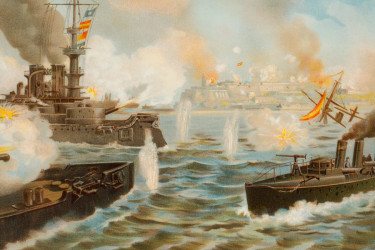
When the U.S. Navy was half the age it is now: an artist’s depiction of American warships bombarding San Juan, Puerto Rico on May 12, 1898 during the Spanish-American War. (Photo by: Universal History Archive/Universal Images Group via Getty Images)

The Birth Pangs of the U.S. Navy

It was founded 250 years ago today—and, oddly, was promptly ordered to attack what is today its biggest base.
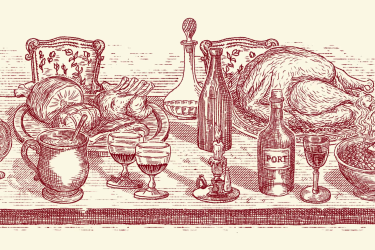
Table set with an 18th-century meal of wine, meat, and vegetables.

So Much Madeira

What the Founding Fathers ate—and drank—on July 4, 1777.
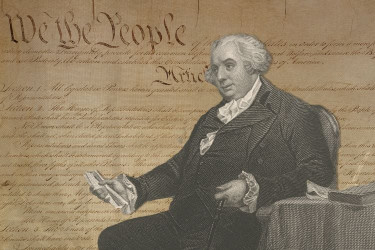
Gouverneur Morris.

The One-Legged Founding Father Who Escaped the French Revolution

Gouverneur Morris wrote the preamble to the Constitution. Later in life, he rejected the foundational document as a failure.
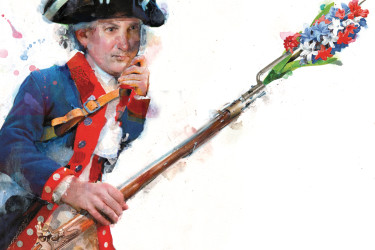
Illustration of John Dickinson with flowers in the barrel of his musket.

The Prudent Patriot

There’s a lot more to Founding Father John Dickinson than not signing the Declaration of Independence.
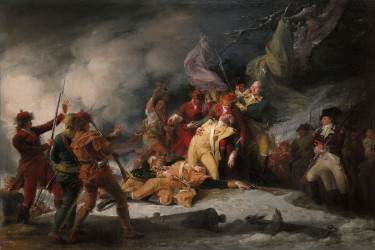
John Trumbull painting of the death of American General Richard Montgomery at the Battle of Quebec.

How the Thirteen Colonies Tried—and Failed—to Convince Canada to Side With Them In the Revolution

After peaceful attempts at alliance-building stalled, the Continental Army launched an ill-fated invasion of Quebec in June 1775.
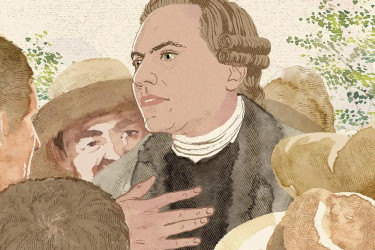
Patrick Henry giving a speech to a crowd of Virginians.

What Spurred the South to Join the American Revolution?

How a dispute with a Scottish lord over westward expansion, gunpowder, and the future of enslaved labor made the southern colonies’ embrace the radical cause.
View of a Boston Street, circa 1778.

Commissary Notes and the Dark History of Revolutionary Financing

From the outset of the American Revolution, a lingering problem that plagued the minds of the Continental Congress dealt with its financing.
Colonists in front of the Old State House in Boston.

‘King Hancock’ Review: The Biggest Name in Boston

More than an artful calligrapher, John Hancock forswore the austerity of his fellow Bostonians, and their extremism.
Jacob Duché delivers the first prayer in the Continental Congress, 1774.

The Traitor Chaplain Who Gave Government Prayer to America — A 4th of July Corrective

When drafting the Constitution, our founders had no need of prayer.
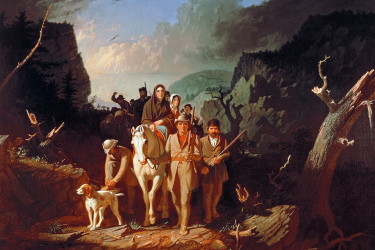
Painting of Daniel Boone escorting settlers through the Cumberland Gap by George Caleb Bingham. (Washington University, St. Louis)

The Articles of Confederation and Western Expansion

In settling a rivalry between Maryland and Virginia and preventing individual states from getting into bed with France and Spain, maybe the Articles weren't a failure after all.
Abraham Lincoln speaking to a crowd.

Stop Making Sense

Are the truths in the Declaration of Independence really self-evident?

Was Declaring Independence Even Important?

Reflections on the latest public debate between historians about the causes of the American Revolution.
Painting of smallpox vaccination

The Long History of Mandated Vaccines in the United States

Vaccines against smallpox during the Revolutionary War are one example of how mandates have protected the health of Americans for more than two centuries.
1747 map of Nova Scotia

Phraseology and the "Fourteenth Colony"

There have been at least eight provinces in British North America labeled the "fourteenth colony." They cannot all claim the same title.
Title page of a collection of the letters that debated Great Britain, inscribed to President John Adams.

Massachusettensis and Novanglus: The Last Great Debate Prior to the American Revolution

James M. Smith explains the last debates between Loyalists and Patriots prior to the official outbreak of the American Revolution.
A cartoon of Boston colonists in a cage.

How Did the Colonies Unite?

The drive for American independence coalesced in only a few years of rapidly accelerating political change.

Foreign Support of the American Cause Prior to the French Alliance

Richard J. Werther discusses how being outmanned by the best army in the world led American revolutionaries to look overseas for the help they needed.
Illustration of Founders signing the Declaration of Independence.

How the Meaning of the Declaration of Independence Changed Over Time

When Thomas Jefferson penned ‘all men are created equal,’ he did not mean individual equality, says Stanford scholar.

What Two Crucial Words in the Constitution Actually Mean

I reviewed publications from the founding era, and discovered that “executive power” doesn’t imply what most scholars thought.

The American Revolution’s Starving, Barefoot, Heroic Troops

Our young nation was very poor, the war was very expensive, and Congress and the states wanted everyone else to pay.
A stone marker for a post road, slightly chipped, reading "Boston 8 miles 1734 A.I."

"To Undertake a News-Paper in This Town"

How printers in the 1770s assembled the news for their papers, how they used the postal system, and how they may have approached Twitter.

America's 100 Other Declarations of Independence

The document we celebrate today wasn't just the work of Thomas Jefferson's individual genius. Everyone was doing it.

Was John Hancock’s Signature Too Big? Or Was Everyone Else’s Too Small?

We hold this truth to be self-evident: John Hancock's signature on the Declaration of Independence was too big.
Trumbull painting of the signing of the Declaration of Independence.

Dusting Off the Declaration

The Declaration of Independence seems to Pauline Maier to be "peculiarly unsuited" for the role that it eventually came to play in America.
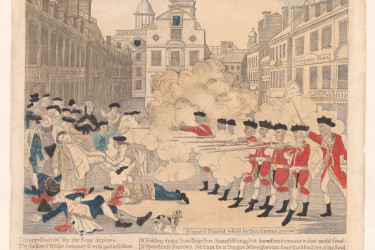
The Boston Massacre, printed by Paul Revere Jr., 1770.
partner

Deploying Federal Troops to U.S. Cities Is a Second Amendment Issue

But not because the founders wanted to see more guns in the hands of Americans.
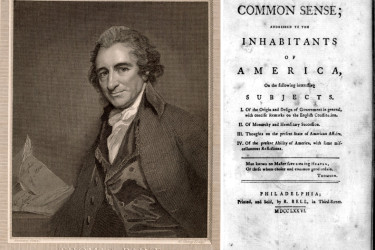
Thomas Paine alongside the front cover of "Common Sense"

Thomas Paine, Common Sense and a Plan for America

The constitutional ideas in Thomas Paine's famous pamphlet.
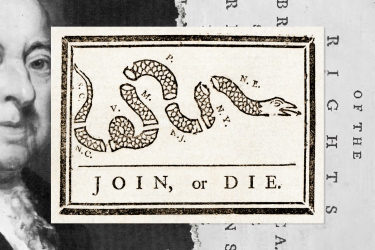
John Adams, Jefferson's pamphlet on the Rights of British America, and Franklin's "Join or Die" cartoon.

What Actually Changed in 1776

The most consequential shift that year was not one of battle lines but of ideology.
William Franklin

Why Did Benjamin Franklin’s Son Remain Loyal to the British?

One of the most influential and ardent Patriots couldn’t persuade his son to join the Revolution.

Filter Results:

Suggested Filters:

Idea

Person