Filter by:

Filter by published date

Viewing 91–120 of 150 results. Go to first page
Lagoon in Majuro Atoll with tropical trees in the background and a rainbow in the sky

On the Map

The flag of Bikini Atoll looks a lot like the American flag. It has the same red and white stripes. The resemblance is intentional.
A few people are gathered at the Atoms For Peace bus, a mobile exhibit about nuclear power operated for a time by the Atomic Energy Commission. c. 1947.
partner

‘Atoms for Peace’ Was Never All That Peaceful—And the World Is Still Living With the Consequences

The U.S. sought to rebrand nuclear power as a source of peace, but this message helped mask a violent history.
Untitled (Strike), Dox Thrash, c. 1940.

Hard Times

The radical art of the Depression years.
Lily Gladstone and Martin Scorsese on the set of "Killers of the Flower Moon."

How Publicity of Killers of the Flower Moon Recalls Rosebud Yellow Robe’s 1950 Hollywood Tour

On the performance of authenticity and the native stories left to tell.
Olivier Bancoult, center, the leader of the Chagos Refugee Group, stands on Capitol Hill with Roger Alexis, a Chagossian, left, and Philip Ah-Chuen, a Mauritian advisor to the group. They met last week with lawmakers to demand reparations and an apology for the forced removal of thousands of native inhabitants from the Chagos Islands in the 1960s and 1970s to make room for a U.S. military base.

They Were Deported to Build a U.S. Naval Base. Now They Want Reparations.

50 years after native inhabitants of the Chagos Islands were forced out to make room for a military base, a Chagossian leader came to D.C. seeking reparations.
Maps and photos of the Smithsonian and its anthropologicl collections.

Revealing the Smithsonian’s ‘Racial Brain Collection’

The Smithsonian’s human brains collection was led by Ales Hrdlicka, a museum curator in the 1900s who believed that White people were superior.
The 1622 Hessel Gerritsz map of the Pacific Ocean.

Asians In Early America

Asian sailors came to the west coast of America in 1587. Within a century they were settled in colonies from Mexico to Peru.
Painting of a young boy working as an apprentice, wearing an apron

How Long Did the School Year Last in Early America?

Even throwing off of a colonial power, representative institutions, Protestantism, and local autonomy in school decisions did not produce an egalitarian system.
The cover of the United Nations FAO-Unesco Soil Map of the World, 1974.

The Earth for Man

Redistributing land was once central to global development efforts—and it should be today.
Final Attack on Arequipa on March 7, 1858. Painting in the Sala Castilla, Museo Nacional de Historia, Lima.

The Many South Carolinas in the Americas

Conflict over centralization, political power, and national identity were not unique occurrences in the Americas during the middle decades of the 19th century.
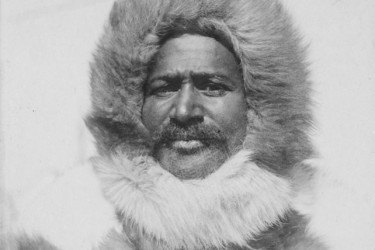
Matthew Henson Henson in a fur coat with a hood pulled over his head.

Matthew Henson: The US' Unsung Black Explorer

While other explorers may claim credit for discovering the North Pole, an unsung and largely forgotten former sharecropper has as good a case as anyone.
18th-century map of Madagascar by Jacques-Nicolas Bellin.

The Hidden Treasures of Pirate Democracy

In his final book, David Graeber looks at an experiment in radical democracy and piratical justice in Madagascar.
Polar bear walks across melting ice in the Arctic National Wildlife Refuge.
partner

Did One Photograph Change the Fate of the Arctic Wildlife Refuge?

What the political fight over a photo teaches us about the power of art, grassroots activism and images.
A man eating an oyster.
partner

Oyster Pirates in the San Francisco Bay

Once a key element in Native economies of the region, clams and oysters became a reliable source of free protein for working-class and poor urban dwellers.
The United States flag flying above that of Guam.

Trapped by Empire

The government of Guam has appointed a Commission on Decolonization, but U.S. control means that all of the island’s options have substantial downsides.
Cover page of "Cotton Mather's Spanish Lessons." Beige cover with a small red image of a tonsured monastic scribe with a book in front of him, evidentally engaged in scholarship.

Structures of Belonging and Nonbelonging

A Spanish-language pamphlet by Cotton Mather explodes the Black-versus-white binary that dominates most discussions of race in our time.
Premiere of The Gaucho at Grauman’s Chinese Theatre in Hollywood, November 4, 1927.

The Gaucho Western

When Hollywood went down Argentine way.
Footprints dated to 23,000-21,000 years ago at the White Sands National Park, New Mexico.

The First Americans – A Story of Wonderful, Uncertain Science

Archaeology and genetics can’t yet agree on when humans first arrived in the Americas. That’s good science, and here’s why.
An art installation that evokes the Hollywood sign with the phrase "Indian Land".

Contest or Conquest?

How best to tell the story of oppressed peoples? By chronicling the hardships they’ve faced? Or by highlighting their triumphs over adversity?
Yellow book cover reading "The Dawn of Everything" in red text.

As Deep as it is Vast: An Introduction to "The Dawn of Everything" in Early America

A new book provides a framework that engages with “big history” or “deep history” while avoiding explanations that flirt with forms of determinism.
Picture of people outside of an abandoned movie theater.

BIPOC? ¡Basta!

Time to blow the final whistle on the oppression Olympics.
Protester in a march, holding a sign that reads "Bank on the future."

The Way We Talk About Climate Change Is Wrong

The language of “sacrifice” reveals we’re stuck in a colonial mindset.
Collage of a contemporary man encircled by layers of an old map, looking at 19th-century men walking past him.

Those Who Know

On Raoul Peck's "Exterminate all the Brutes" and the limits of rewriting the narrative.
Painting of a Dutch merchant with his wife and an enslaved servants, standing on the shore with Dutch ships sailing in the background

The Legacies of Calvinism in the Dutch Empire

In the 17th century, Dutch proselytisers set out for Asia, Africa and the Americas. The legacy of their travels endures.
A "Meditation" sculpture in the middle of Indian Mounds Regional Park.

A Long American Tradition

On the robbing of Indigenous graves throughout the 19th-century.
a picture depicting the FBI agent entering Miller's house

How the FBI Discovered a Real-Life Indiana Jones in, of All Places, Rural Indiana

A 90-year-old amateur archaeologist who claimed to have detonated the first atomic bomb was one of the most prolific grave robbers in modern American history.
Viking statues with a map background

Viking Map of North America Identified as 20th-Century Forgery

New technical analysis dates Yale's Vinland Map to the 1920s or later, not the 1440s as previously suggested.
Drawing of the Pawpaw fruit (green)
partner

Plant of the Month: The Pawpaw

The pawpaw is finding champions again after colonizers' dismissal, increasing globalization and economic needs.
Yumi Doi, an activist with Group of Fighting Women, at a protest against sexual discrimination, Tokyo, June 1972

A Work in Progress

Two new books on the history of feminism emphasize global grassroots efforts and the influence of American women labor leaders on international agreements.
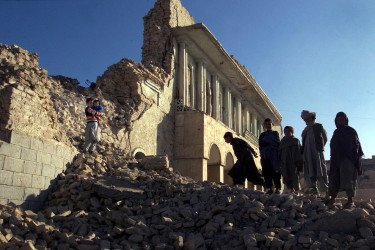
Afghan children standing in rubble
partner

Invading Other Countries to ‘Help’ People Has Long Had Devastating Consequences

For more than a century, U.S. wars of invasion have claimed a humanitarian mantle.

Filter Results:

Suggested Filters:

Idea

Person