Filter by:

Filter by published date

Viewing 151–180 of 274 results. Go to first page

The Split Personality of Ken Burns’s “The Civil War”

The documentary's accommodation of the Lost Cause narrative may have left viewers with a skewed understanding of the conflict.

What Was the Confederate Flag Doing in Cuba, Vietnam, and Iraq?

The Confederate flag’s military tenure continued long after the Civil War ended.

“Richmond Reoccupied by Men Who Wore the Gray”

In 1890, the former Confederate capital erected a monument to Robert E. Lee-and reasserted white supremacy.

What This Cruel War Was Over

The meaning of the Confederate flag is best discerned in the words of those who bore it.

The Unlikely Paths of Grant and Lee

The two men met at Appomattox. The loser would become a role model, the victor an embarrassment.

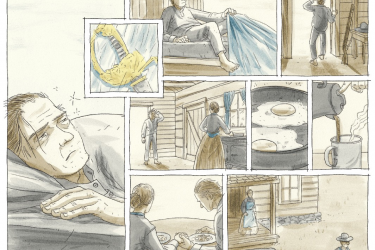
General Lee’s Sword

A graphic retelling of Robert E. Lee surrender at Appomattox Court House.
The house of Alfred Iverson Jr. behind a white curtain.

My Civil War

A southerner discovers the inaccuracy of the the myths he grew up with, and slowly comes to terms with his connection to the Civil War.

Thanks a Lot, Ken Burns

Because of you, my Civil War lecture is always packed with students raised on your romantic, deeply misleading portrait of the conflict.
Sign reading "take it down" in front of Confederate flag

Rebel Yell

The recent march in South Carolina, demanding removal of the Confederate flag from the state Capitol is the latest episode in a long-running debate over slavery's legacy.
Ken Burns

What’s Wrong with The American Revolution by Ken Burns 

Ken Burns’s latest PBS series is long on muskets and bayonets, but the history of the American Revolution remains strangely understated.
The unveiling of the statue of Barbara Rose Johns

Statue of Black Teen Replaces Robert E. Lee at U.S. Capitol

Barbara Rose Johns was only 16 when she led a walkout in 1951 to protest horrendous conditions at her segregated high school in rural Virginia.

George Floyd and the Writing of the Final Chapter of Richmond's Confederate Monuments

Do we as Americans have the strength to confront our complicated past?
KKK members parade down Pennsylvania Avenue in Washington, D.C., on August 8, 1925.

When the KKK Came to D.C.

Revisiting a 1925 march through the eyes of Black newspapers.
Sam Francis.

The Sam Francis I Knew

The late conservative thinker, who died 20 years ago Saturday, has transcended the pariah status imposed on him during his life.
Gaineswood Plantation mansion.

Plantation Tourism Continues to Raise Questions

One plantation tourist manager said covering slavery would be like “trying to tell the story at Disneyland of how poorly the employees at Disney are treated.”
Harry S. Truman, Dwight D. Eisenhower, and Lyndon B. Johnson.
partner

The Border Presidents and Civil Rights

Three US presidents from the South’s borders—Truman, Eisenhower, and Johnson—worked against Southern politicians to support civil and voting rights.
Statute of Robert E. Lee in Richmond, Virginia, with construction hook ready to remove it.
partner

History Shows the Danger of Comparing Trump to Jesus

It’s important to remember why analogies to Jesus should stay out of the political realm. The results are always ugly.
Civil War soldiers on horseback with pistols.

The Hunt for John Wilkes Booth Goes On

A new television miniseries depicts the pursuit of Lincoln’s killer. But the public appetite for tales about the chase began even as it was happening.
Democrat and Republican stickers with letters (R or D) indicating the affiliation.

The Story Wars

The conflict between Red and Blue America is a clash of national mythologies.
Mirror images of General James Longstreet.

How a Die-Hard Confederate General Became a Civil Rights–Supporting Republican

James Longstreet became an apostate for supporting black civil rights during Reconstruction.
The Confederate States Almanac
partner

On Harvests and Histories

Almanacs from the Civil War era reveal how two sides of an embattled nation used data from the natural world to legitimize their claims to statehood.
J. Edgar Hoover

J. Edgar Hoover Shaped US History for the Worse

As director of the FBI for decades, J. Edgar Hoover helped build a massive, professionalized national security state and hounded leftists out of public life.
A stylized drawing of Bill Erquitt.

The Death of a Relic Hunter

Bill Erquitt was an unforgettable character among Georgia’s many Civil War enthusiasts. After he died, his secrets came to light.
Harvard University President Drew Gilpin Faust in 2009.

The Bleak, All But-Forgotten World of Segregated Virginia

Former Harvard President Drew Gilpin Faust’s extraordinary memoir recalls painful memories for her--and me.
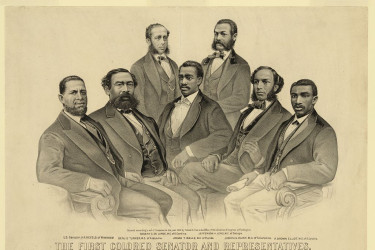
Group portrait of the first African-American legislators in Congress, 1872.

Reclaiming the American Story

To Heather Cox Richardson, the battle for our history is the battle for our democracy. And we may be nearing the endgame.
A Ku Klux Klan march, late 1800s to early 1900s.

Tracing the Legacy of Southern White Migration

Unlike the Southern whites who moved en masse during the 20th century, these early migrants often had direct, personal ties to the institution of slavery.
Woman playing piano for African American soldiers.

Black Burials and Civil War Forgetting in Olustee, Florida

Finding the forgotten and racialized landscape of Civil War memory.
A man in front of a "Banned Books" sign.

Nothing New Under the Sun

APAAS, Florida, and history.
Unionists in East Tennessee Swear Loyalty to the Union Flag in 1862.

Remembering Southern Unionists

Confederate monuments helped to erase the history of those white and black southerners who remained loyal and were willing to give their lives to save the United States.
A crane removes the Robert E. Lee statue from Monument Avenue in Richmond, 2021.

The Question of the Offensive Monument

A new book asks what we lose by simply removing monuments.

Filter Results:

Suggested Filters:

Idea

Person