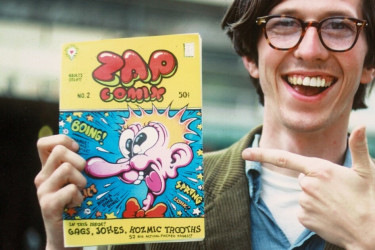
Robert Crumb holding up a cartoon book and pointing to it.

Desperate Character: Rambunctious R. Crumb

Rambunctious and often offensive, R. Crumb draws freely on pre-existing racial and gender stereotypes.

The Strange and Wonderful Subcultures of 1960s New York

From slum clearance to beatnik protests, how Greenwich Village became a battleground over race, art, and redevelopment.
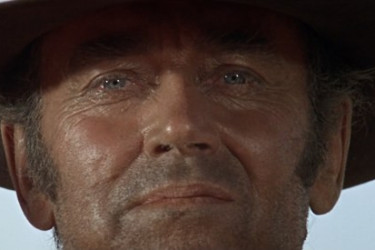
Henry Fonda

Straight Shooter

"Henry Fonda for President" more than makes the case for Fonda’s centrality in the American imaginary.
Harry Smith pointing finger upward

Outsider’s Outsider

At once famous and obscure, marginal and central, Harry Smith anticipated and even invented several important elements of Sixties counterculture.
An uncredited performer with a member of the Delta Rhythm Boys in Give Me Some Skin (1946).

Jammin’ in the Panoram

During World War II, proto–music videos called “soundies” blared pop patriotism from visual jukeboxes across American bars.
Marijuana leaves superimposed over photo of two men.

The Dank Underground

In the late Sixties, countercultural media was distributed by the Underground Press Syndicate and bankrolled by marijuana.
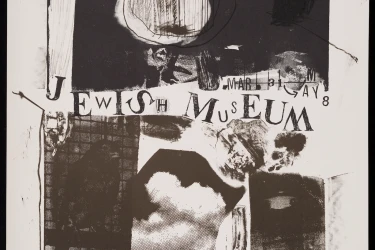
Black-and-white collage style poster for the Jewish Museum

Fuzz! Junk! Rumble!

A show at the Jewish Museum surveys three eventful years of art, film, and performance in New York City—and the political upheavals that defined them.
Comic of a boy inside an atom structure while a man looks on.

The Surprising History of the Comic Book

Since their initial popularity during World War II, comic books have always been a medium for American counterculture and for nativism and empire. 

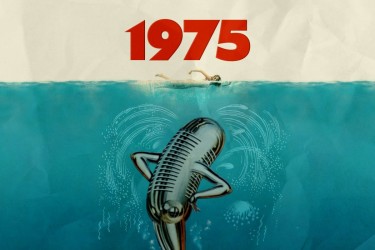
Nashville Contra Jaws, 1975

In their time, “Jaws” and “Nashville” were regarded as Watergate films, and both were in production as the Watergate disaster played its final act.

Ronald Reagan’s Reel Life

Did the movies ever matter? They did to Ronald Reagan.

What Makes ‘The Living Dead’ My Film of 1968

In so many ways, George Romero's lo-budget horror film defined the year 1968.
Arthur Szyk painting of Hitler as the anti-Christ with skulls reflected in his eyes.

Jewish Heroes and Nazi Monsters

The many lives of ferocious cartoonist and illustrator Arthur Szyk at a jewel of a show at the New-York Historical Society.
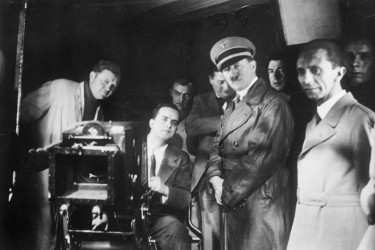
Hitler, Goebbels, and a film projector.

Business as Usual: Hitler in Hollywood

Hollywood kept distributing films in Nazi Germany, facing pressure from both the regime and US censors. Some studios resisted, others complied.
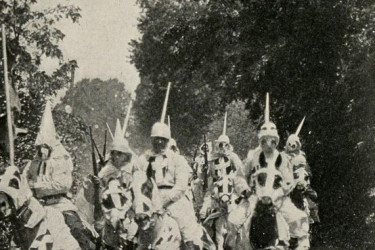
Robed Ku Klux Klan members on horseback, in a scene from "Birth of a Nation."

First Movie in the White House: ‘Birth of a Nation’

A book traces how the 1915 film reshaped cinema, fueled white supremacy, and sparked protests, censorship battles, and lasting cultural debate.
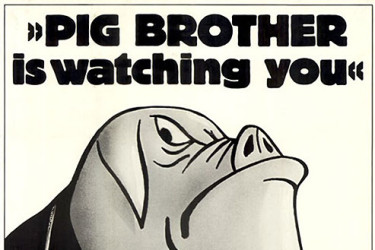
Poster for 1954 Animal Farm film.

Short Cuts: The CIA’s Animal Farm

The CIA secretly funded the 1954 Animal Farm film, reshaping Orwell’s ending to push anti-Soviet messaging during early Cold War politics.
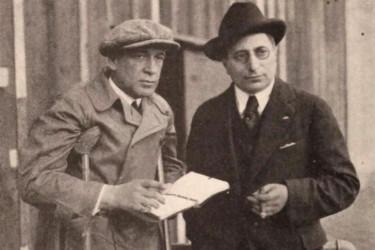
Director Edwin Carewe and studio owner Louis B. Mayer on a film set.

Moguls: Did the Jews Invent Hollywood?

Anti-Hollywood rhetoric often echoed anti-Jewish stereotypes. Carr shows how fears of Jewish “control” shaped debates over movies, culture, and politics.
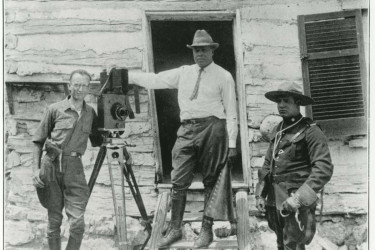
Oscar Micheaux on set in 1923

Building an Empire

On the pioneering and problematic career of Oscar Micheaux.