Filter by:

Filter by published date

Viewing 271–300 of 375 results. Go to first page
Workers working on ruins after the US Civil War, circa 1865.

The Abolitionist Legacy of the Civil War Belongs to the Left

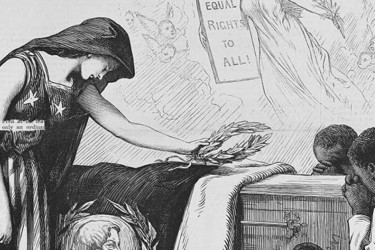
The US Civil War was a revolutionary upheaval that crushed slavery and stoked hopes of a broader emancipation against the rule of property.
Illustration of Elizabeth Keckley
partner

Elizabeth Keckley's Memoir "Behind the Scenes, or, Thirty Years a Slave and Four in the White House"

Keckley’s decision to write about her employers from the viewpoint of a household laborer—she was seamstress to Mary Todd Lincoln—enraged audiences.
MLK waving at March on Washington
partner

"I Have A Dream": Annotated

Martin Luther King, Jr.'s iconic speech, annotated with relevant scholarship on the literary, political, and religious roots of his words.
A line of black civil war soldiers holding their rifles.
partner

Black Soldier Desertion in the Civil War

The reasons Black Union soldiers left their army during the Civil war were varied, with poor pay, family needs and racism among them.
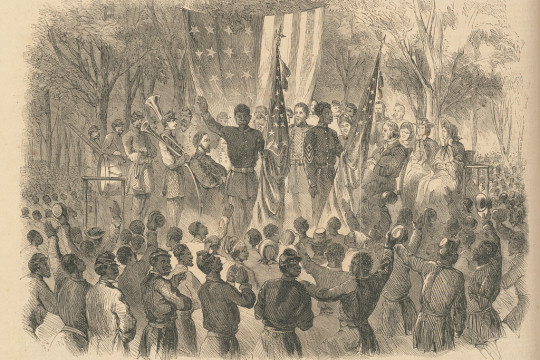
Emancipation Day in South Carolina
Exhibit

Emancipation

The long history of emancipation in the United States, from individual escapes and manumissions, through Civil War fighting and Reconstruction legislation, to Juneteenth commemorations.

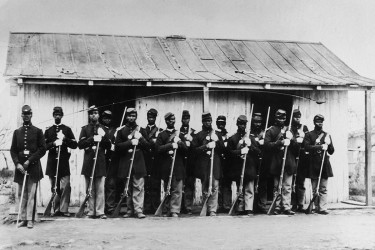
Company of African American soldiers, 1865.

The Racial Politics of Demobilizing USCT Regiments

The inequitable dismissal of US soldiers following the conclusion of the Civil War.
Portrait photograph of John B. Cade.
partner

John B. Cade's Project to Document the Stories of the Formerly Enslaved

There are revelations in a newly digitized collection of slave narratives compiled by a professor and his students during the Great Depression.
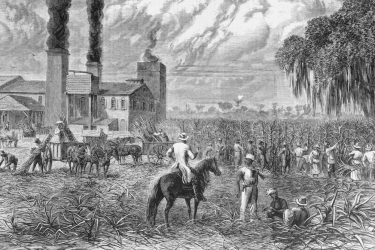
Harvesting on a Louisiana sugar plantation, 1875; an overseer monitors laborers in the field, while a factory billows smoke in the background.

Making Sugar, Making ‘Coolies’

Chinese laborers toiled alongside Black workers on 19th-century Louisiana plantations.
Watercolor painting of enslaved people walking barefoot on a forced march, with white men on horseback at the front and back of the line.

Reparative Semantics: On Slavery and the Language of History

Scholarly accounts of slavery have been changing, but these correctives sometimes say more about historians than the historical subjects they're writing about.
‘This Little Boy would persist in handling Books Above His Capacity—and this was the Disastrous Result’; cartoon of Andrew Johnson by Thomas Nast, 1868

He Was No Moses

While he opposed slavery and southern secession early in his career, as president Andrew Johnson turned out to be an unsightly bigot.
Statue of Robert E. Lee on his horse.

Reëxamining the Legacy of Race and Robert E. Lee

The historian Allen C. Guelzo believes that the Confederate general deserves a more compassionate reading.
Painting of British soldiers surrendering their arms to George Washington.

The Yorktown Tragedy: Washington's Slave Roundup

History books remember Yorktown as a "victory for the right of self-determination." But the battle guaranteed slavery for nearly another century.
Archaeologists excavating grounds near the Rhode Island state house.

Before Rhode Island Built Its State House, a Racist Mob Destroyed the Community That Lived There

In 1831, a group of white rioters razed the Providence neighborhood of Snowtown. Now, archaeologists are excavating its legacy.
Image of John C. Calhoun

How Slavery Haunts Today’s Big Debates About Federal Spending

John C. Calhoun knew what a strong federal government might do.
Photo of Union commanders.

The Anti-Lee

George Henry Thomas, southerner in blue.
Red binder pulled from row of blue binders

Serendipity in the Archives

Or, a lost freedom story I found while looking for something else.
A cracked picture of Washington crossing the Delaware River.

The Incoherence of American History

We ascribe too much meaning to the early years of the republic.
Two hooded KKK members

The Ku Klux Klan Was Also a Bosses’ Association

The KKK violently resisted the revolutionary gains of the Civil War and Reconstruction, and sought to keep the black masses toiling in submission.
Side profile of Julia Grant

Julia Dent Grant’s Personal Memoirs as a Plantation Narrative

Her memoirs contribute to the inaccurate post-Civil War memory of the Southern plantation.
A supporter of US President Donald Trump holds a Confederate flag outside the Senate Chamber during a protest after breaching the US Capitol in Washington, DC, January 6, 2021. - The demonstrators breeched security and entered the Capitol as Congress debated the 2020 presidential election Electoral Vote Certification.

Jan. 6 Was a "Turning Point" in American History

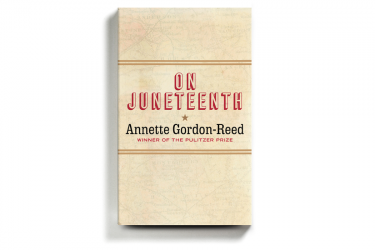
Pulitzer-winning historian Annette Gordon-Reed reflects on the battle for the past and the fragile state of American democracy.
A painting entitled Our Town, with Black children playing on a suburban street

The Truth About Black Freedom

This year’s Juneteenth commemorations must take a deeper look at the history of Black self-liberation to understand what emancipation really means.
African American mother and children in peach vignette, c. 1885.

A Mother’s Influence

How African American women represented Black motherhood in the early nineteenth century.
Illustration of black calvary officers with a Native American, circa 1874

Is This Land Made for You and Me?

How African Americans came to Indian Territory after the Civil War.
Wooden cross in the Eli Jackson Methodist Church cemetery in San Juan, Texas.

When Slaves Fled to Mexico

A new book tells the forgotten story of fugitive slaves who found freedom south of the border.
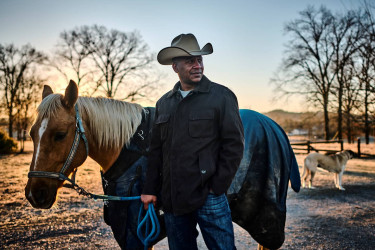
Corey Lea, a beef and pork rancher in Murfreesboro, Tenn., who also advocates for Black farmers.
partner

Black Farmers Have Always Faced Injustice. Will the American Rescue Plan Help?

This plight dates back to the era of slavery.
engraving of a slave ship

Why Did the Slave Trade Survive So Long?

The history of the Atlantic slave trade after the American Revolution is a story of sustained efforts to suppress it even as demand for slaves increased.
Illustration of the assassination of president Lincoln in Ford's Theatre

We Lionize Abraham Lincoln – But John Wilkes Booth Still Embodies a Part of America’s Soul

How the insurrection on January 6th brought a legendary assassin back to life.
James Weldon Johnson.

James Weldon Johnson’s Ode to the “Deep River” of American History

What an old poem says about the search for justice following the Capitol riot.
A home in Paramus, New Jersey.

Slavery's Legacy Is Written All Over North Jersey, If You Know Where to Look

New Jersey was known as the slave state of the North, and our early economy was built on unpaid labor.
Illustration of James McCune Smith, the African Free School #2, and the University of Glasgow

America's First Black Physician Sought to Heal a Nation's Persistent Illness

An activist, writer, doctor and intellectual, James McCune Smith, born enslaved, directed his talents to the eradication of slavery.
St. Louis arch

The Arch of Injustice

St. Louis seems to define America’s past—but does it offer insight for the future?

Filter Results:

Suggested Filters:

Idea

Person