Menu
Excerpts
Exhibits
Collections
Originals
Categories
Map
Search
Idea
expansion of slavery
132
Filter by:
Date Published
Filter by published date
Published On or After:
Published On or Before:
Filter
Cancel
Viewing 61–90 of 132 results.
Go to first page
Prospects for Partisan Realignment: Lessons from the Demise of the Whigs
What America’s last major party crack-up in the 1850s tells us about the 2010s.
by
Philip Wallach
via
Brookings
on
March 6, 2017
partner
Upheaval at the 1860 Democratic Convention: What Happened When a Party Split
Some issues are too fundamental for a party to withstand, and the consequences can last for a generation.
via
Retro Report
on
July 28, 2016
Andrew Jackson was A Slaver, Ethnic Cleanser, and Tyrant
Andrew Jackson deserves nothing but contempt from modern America, not a place on our currency.
by
Dylan Matthews
via
Vox
on
April 20, 2016
A Topic Best Avoided
After the Civil War, Abraham Lincoln faced the issue of sorting out a nation divided over the issue of freed slaves. But what were his views on it?
by
Nicholas Guyatt
via
London Review of Books
on
December 1, 2011
Slave Voyages
This digital memorial raises questions about the largest slave trades in history and offers access to the documentation available to answer them.
via
Emory Libraries And Information Technology
on
December 15, 2008
Three Interviews With Old John Brown
Atlantic writer William Phillips conducted three interviews with Brown before Brown's fateful raid on Harper's Ferry.
by
William A. Phillips
via
The Atlantic
on
November 30, 1879
The Election in November
The Atlantic’s editor endorsed Abraham Lincoln for presidency in the 1860 election, correctly predicting it would prove to be “a turning-point in our history.”
by
James Russell Lowell
via
The Atlantic
on
October 1, 1860
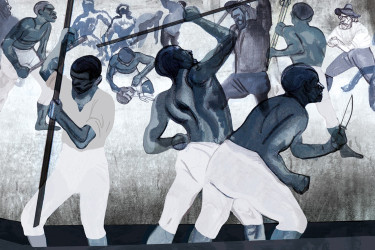
The New History of Fighting Slavery
What we learn by tracing rebellions from Africa to the Americas.
by
Laurent Dubois
via
The Atlantic
on
January 6, 2026
The Nation’s Guest
The Marquis de Lafayette’s final visit to the United States in 1825 can show us how to commemorate the Revolution.
by
Iris de Rode
via
Law & Liberty
on
November 25, 2025
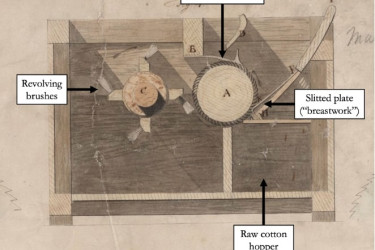
How Eli Whitney Single-handedly Started the Civil War . . . and Why That’s Not True
The real Whitney story is less grand than the legend, but more interesting and, ultimately, more edifying.
by
Ariel Ron
via
Commonplace
on
October 14, 2025
Beware Today’s ‘Fire-Eaters’
There are echoes in our political rhetoric of the men who helped talk the United States into civil war.
by
Mark Hertling
via
The Bulwark
on
September 22, 2025
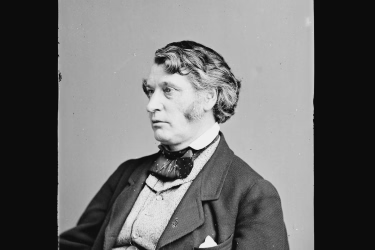
What We Can Learn From the Senator Who Nearly Died for Democracy
The brutal caning of Sen. Charles Sumner in 1856 shows the difference between courage and concession.
by
Zaakir Tameez
via
Washington Post
on
June 1, 2025
The Prelude to the Civil War
“Only two states wanted a civil war—Massachusetts and South Carolina.”
by
Hunter DeRensis
via
The American Conservative
on
May 5, 2025
The Root and The Branch: Working-Class Reform and Antislavery, 1790–1860
On the robust influence of labor reform and antislavery ideas and movements on each other from the early National period to the Civil War.
by
Rosemary Fuerer
,
Sean Griffin
via
LaborOnline
on
April 9, 2025
partner
The Culture Question: How Hot-Button Issues Divide Us
Culture wars have a long and divisive history in American politics, with gender, race and religion continuing to inflame public opinion.
via
Retro Report
on
September 20, 2024
partner
“In the White Interest”
Many founders expressed their hope that slavery would be abolished, while simultaneously exerting themselves to defend it.
by
Timothy Messer-Kruse
via
HNN
on
September 18, 2024
Marx Goes to Texas
Drawn to communities of German socialist expatriates in the area, Marx once considered making his way to Texas.
by
Ryan Moore
via
Protean
on
August 11, 2024
Slavery, Capitalism, and the Politics of Abolition
"The Reckoning," Robin Blackburn’s monumental history, offers a dizzying account of the politics behind slavery's rise and fall.
by
Alec Israeli
via
Jacobin
on
May 19, 2024
No Slaves, No Masters: What Democracy Meant to Abraham Lincoln
A detailed look on Abraham Lincoln's political philosophy on slavery, ownership, and freedom.
by
Allen C. Guelzo
via
Literary Hub
on
February 8, 2024
original
The Era Without a Name
There’s no one place to learn about the early decades of the 19th century. So I set off to see how that history is being remembered in the places where it happened.
by
Ed Ayers
on
January 17, 2024
partner
Fights Over American Democracy Reach Back to the Founding Era
In early America, the soaring ideals behind establishing a new democracy were marked by cycles of progress and backlash.
via
Retro Report
on
January 4, 2024
original
Borderland Stories
What we remember when we remember the Alamo.
by
Ed Ayers
on
November 13, 2023
How a Grad Student Uncovered the Largest Known Slave Auction in the U.S.
The find yields a new understanding of the enormous harm of such a transaction.
by
Jennifer Berry Hawes
via
ProPublica
on
June 16, 2023
Frederick Douglass Thought This Abolitionist Was a 'Vastly Superior' Orator and Thinker
A new book offers the first full-length biography of newspaper editor, labor leader and minister Samuel Ringgold Ward.
by
Richard Blackett
via
Smithsonian Magazine
on
March 24, 2023
partner
What 1856 Teaches Us About the Ramifications of the House Speaker Fight
The battle is worth winning for Kevin McCarthy — and could reshape the Republican Party.
by
Corey M. Brooks
via
Made By History
on
January 5, 2023
Their Wealth Was Built On Slavery. Now a New Fortune Lies Underground.
In Virginia, the land still owned by the Coles family could yield billions in uranium. Does any of that wealth belong to the descendants of the enslaved?
by
Julie Zauzmer Weil
via
Retropolis
on
December 1, 2022
“A Solemn Battle Between Good and Evil.” Charles Sumner’s Radical, Compelling Message of Abolition
The senator from Massachusetts and the birth of the Republican Party.
by
Timothy Shenk
via
Literary Hub
on
October 24, 2022
In Jon Meacham’s Biography, Lincoln Is a Guiding Light For Our Times
The famous historian makes the claim that the demigods of American historical mythology can help us carve paths through our forbidding 21st-century wilderness.
by
John Fabian Witt
via
Washington Post
on
October 24, 2022
original
What is Political Realignment?
An annotated collection of resources from the Bunk archive that help explain the shifting sands of American politics.
by
Kathryn Ostrofsky
on
September 8, 2022
The Mapping of Race in America
Visualizing the legacy of slavery and redlining, 1860 to the present.
by
Anika Fenn Gilman
,
Catherine Discenza
,
John Hessler
via
Library of Congress
on
July 28, 2022
View More
30 of
132
Filters
Filter Results:
Search for a term by which to filter:
Suggested Filters:
Idea
slavery
abolitionism
slaveholders
political divisions
Civil War, causes
expansionism
sectionalism
U.S. Constitution
political compromise
American Civil War
Person
John Quincy Adams
Roger Brooke Taney
Dred Scott
Matthew Karp
Stephen A. Douglas
Susan Schulten
Abraham Lincoln
Fred Kaplan
John F. Kelly
Charles Sumner